
4:25 AM 10/12/2021 – Post Link
UK security forces: Russia stole Oxford jab blueprint | EU Leaders Gather In Ukraine For Summit In Shadow Of Russia | Ukraine calls on US and Germany to impose sanctions on Russia’s Gazprom
Michael Novakhov’s favorite articles on Inoreader
Security forces in the United Kingdom have reportedly told the ministers that Russian spies stole the Oxford Astrazeneca covid vaccine formula and used it to create Sputnik jab.
#Russia #UnitedKingdom #WION
About Channel:
WION -The World is One News, examines global issues with in-depth analysis. We provide much more than the news of the day. Our aim to empower people to explore their world. With our Global headquarters in New Delhi, we bring you news on the hour, by the hour. We deliver information that is not biased. We are journalists who are neutral to the core and non-partisan when it comes to the politics of the world. People are tired of biased reportage and we stand for a globalised united world. So for us the World is truly One.
Please keep discussions on this channel clean and respectful and refrain from using racist or sexist slurs as well as personal insults.
Subscribe to our channel at https://goo.gl/JfY3NI
Check out our website: http://www.wionews.com
Connect with us on our social media handles:
Facebook: https://www.facebook.com/WIONews
Twitter: https://twitter.com/WIONews
Follow us on Google News for latest updates
Zee News:- https://bit.ly/2Ac5G60
Zee Bussiness:- https://bit.ly/36vI2xa
DNA India:- https://bit.ly/2ZDuLRY
WION: https://bit.ly/3gnDb5J
Zee News Apps : https://bit.ly/ZeeNewsApps
Dances With Bears

Radio Free Europe / Radio Liberty
“syria kurds russia” – Google News

A total of 2,323 new cases of the coronavirus were diagnosed across Israel Monday, according to data released by the Health Ministry Tuesday morning, up from 1,479 new cases reported a day earlier. The percentage of tests coming back positive rose on Monday to 2.00%, after falling Sunday to 1.87%, the lowest level recorded since July 24th. The number of 25,155 known active cases of the virus across Israel fell from 25,155 Monday to 25,127 Tuesday. The number of hospitalized COVID patients also fell Tuesday, declining from 638 to 617. Since the pandemic began, 1,308,925 confirmed cases of the virus have been reported. The number of seriously ill patients continued to fall Tuesday, sinking from 460 on Sunday and 440 on Monday to 427. Of those 427 seriously ill patients, 219 are in critical condition, down from 222 a day earlier, with 187 on respirators. The infection coefficient, which measures the decline or expansion of the pandemic, rose to 0.72 on October 1st, the latest day for which data is available, climbing from 0.70 the day before. The reproduction coefficient (R) has remained below 1.0 since September 6th, marking a decline in the pandemic. Thus far, a total of 7,940 coronavirus-related fatalities have been recorded across Israel, including four deaths on Monday.
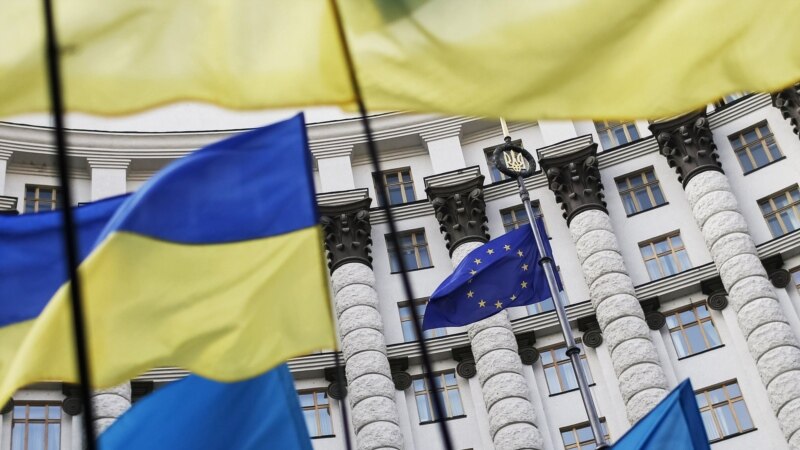
Radio Free Europe / Radio Liberty
The post Radio Free Europe / Radio Liberty: EU Leaders Gather In Ukraine For Summit In Shadow Of Russia first appeared on Russia News Review.
Russia News Review
“Sergei Skripal” – Google News
“us national security” – Google News
Puerto Rico Water – BingNews
“global security” – Google News
Eric Gomez
Arms Race,

Who will win? The North or the South?
Key point: This recent flurry of testing activity is the latest chapter in a missile arms race between North and South Korea that shows little sign of abating.
It has been a very busy week for missile tests on the Korean peninsula. North Korea tested a new type of ground‐launched cruise missile to start the week and launched two short‐range ballistic missiles (SRBMs) a couple days later. South Korea tested a new conventional submarine‐launched ballistic missile only a few hours after North Korea’s SRBM test. South Korea’s Ministry of National Defense also released video footage of several new missile systems, including a supersonic anti‐ship cruise missile, an air‐launched land attack cruise missile, and a ballistic missile with a heavy warhead capable of destroying bunkers and other hardened targets.
This recent flurry of testing activity is the latest chapter in a missile arms race between North and South Korea that shows little sign of abating. The inter‐Korean missile arms race could make any future inter‐Korean crises more dangerous and prone to escalation.
In the summer and autumn of 2017, North Korea successfully tested intercontinental‐range ballistic missiles capable of hitting the United States. Pyongyang pulled back on missile testing in 2018 to give diplomacy a chance, but after the failure of the Hanoi summit in early 2019 it returned to missile testing.
With one notable exception, all the new North Korean missile systems tested since the Hanoi summit are shorter range and primarily threaten South Korea and Japan. An important technical characteristic of North Korea’s new missiles is their use of solid rocket fuel, which makes them easier to transport and allows for shorter preparation time before firing.
North Korea’s new missile capabilities are armed with conventional warheads for the time being, but this may not be the case for much longer. In January 2021, Kim Jong Un gave a report to the 8th Party Congress that called for developing smaller nuclear warheads that could be carried by shorter‐range missiles.
North Korea has not yet demonstrated the ability to produce such warheads but given both the history of North Korea’s nuclear program and the high level of importance that Kim assigned to the effort it should not take long to develop new warhead designs. A recent report by the UN nuclear watchdog indicates that the plutonium producing reactor at the Yongbyon complex is running again after being dormant for a couple years. It will take some time for North Korea to process the plutonium, but more fissile material means more nuclear warheads.
South Korea’s missile forces emphasize the ability to conduct rapid, conventional attacks against North Korean leadership and command and control targets. The recent video footage of a ballistic missile punching a hole through the top of a bunker is a good illustration of South Korea’s intention to use these capabilities to go after the North’ leadership. Additionally, South Korea’s conventional missiles could also destroy North Korean nuclear weapons provided Seoul can locate the weapons after they leave their basing areas.
In other words, South Korea is developing a conventional counterforce capability that would allow it to degrade North Korea’s ability to use nuclear weapons without South Korea having nuclear weapons of its own. The ability to launch conventional ballistic missiles from a submarine provides South Korea with greater flexibility and surprise given North Korea’s weaknesses in anti‐submarine warfare and air defense.
The inter‐Korean missile arms race makes will make future crises more dangerous. During the 2017 crisis, North Korea indicated that its nuclear strategy relies on threats of intentional, rapid escalation to deter the United States and South Korea from conducting a first strike of their own. Adding solid‐fuel, dual‐capable regional missiles will make it much easier for North Korea to make good on this threat as the new capabilities are more survivable against both attack and interception by missile defense than their liquid‐fuel predecessors.
For South Korea, its conventional missile forces offer a way to prevent a nuclear attack, but only if South Korea can get its shot off before North Korea can issue a launch order. Counterforce attacks work when there is still a force to counter. If Seoul waits too long to use its missiles to disrupt North Korea’s nuclear command and control, then it is more likely to suffer a nuclear attack. There is very low likelihood that North and South Korea decide to run these scenarios out of the blue. Instead, the danger of the missile arms race will be most acute if there is a repeat of the 2010 inter‐Korean crises or the 2017 “fire and fury” period.
Focusing on nuclear diplomacy in the Korean peninsula is important given the consequences of failure, but it should not blind observers to the growing danger of the inter‐Korean missile arms race. Diplomacy remains the best available path for reducing the danger of arms racing, but the Biden administration needs to come to terms with the fact that arms control is a more realistic goal than denuclearization of North Korea.
This article was first published by The Cato Institute.
Image: Reuters
The National Interest
«Узнав об этом решении, я сначала удивился, потом обрадовался и от всей души хотел бы поздравить Дмитрия Муратова и пожелать ему и его газете дальнейших успехов». Владимир Познер отреагировал на присуждение Нобелевской премии мира главному редактору «Новой газеты» Дмитрию Муратову.