
Fred Cray is a painter’s photographer. For more than 40 years, the Brooklyn-based artist has skulked the streets of multiple continents for hours on end, taking thousands upon thousands of photos. But you won’t see plain-old snapshots at his exhibit in Dumbo, which launches November 4.
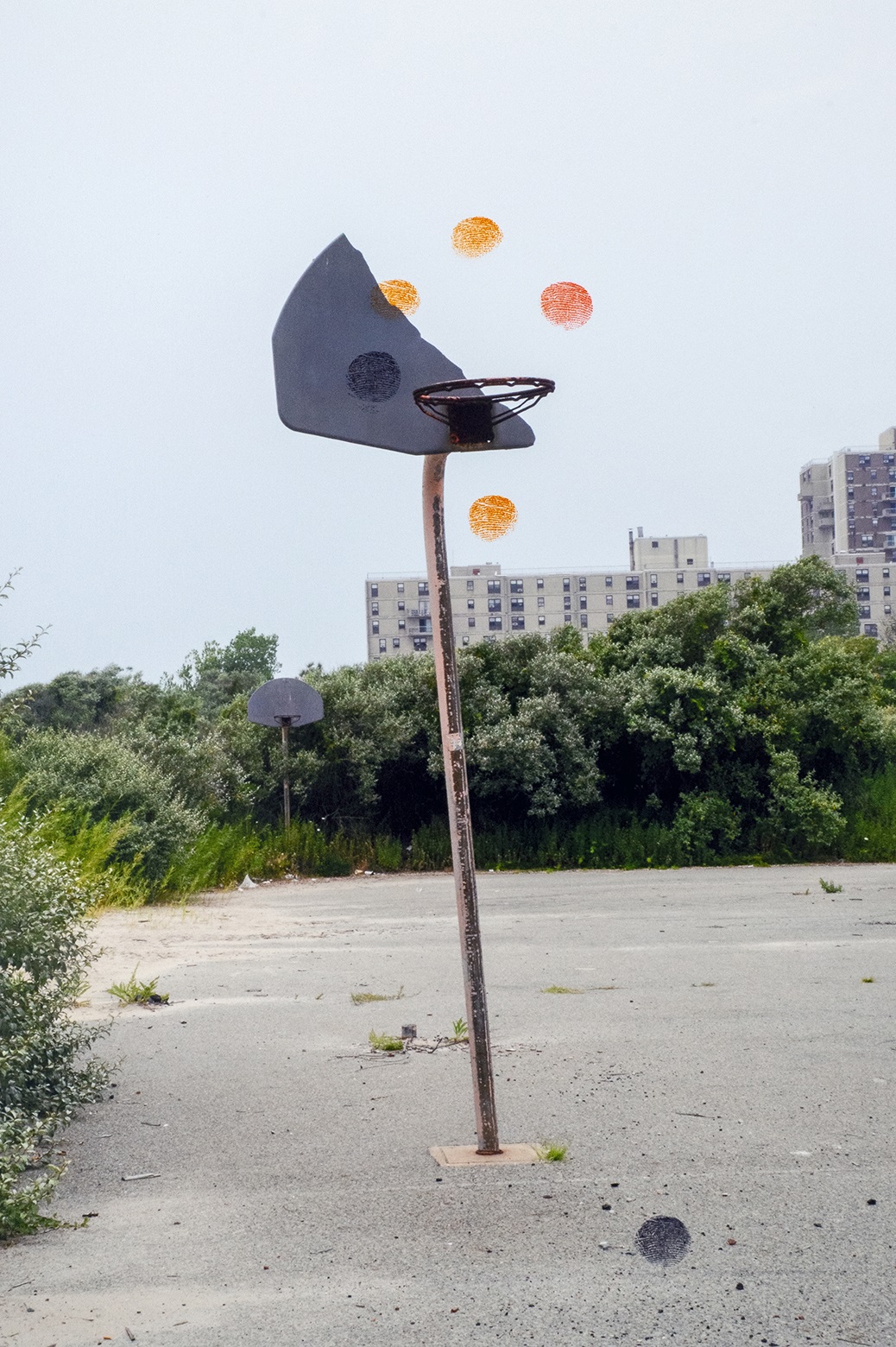
Cray superimposes other images, text and effects over his photographs to create a sense of movement and change. As a result, they tend feel more like paintings than typical photos. This effect is almost four-dimensional: Fingerprints float over blue skies, colors warp, the photos themselves often pop up where you least expect them.
His work has appeared regularly in solo exhibitions and group shows since the late 1970s. Cray has published more than 10 books of his work—which has been included collections ranging from The Museum of the City of New York to the Brooklyn Museum of Art to the California Museum of Photography.
Brooklyn Magazine sat down with Cray to talk about his life as an artist before and during the pandemic in anticipation of his upcoming exhibit, “Fred Cray: Singular” at Janet Borden, Inc. at 91 Water Street, today through December 22.
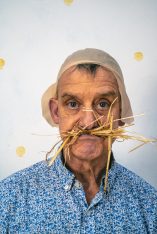
Cray, cray (Courtesy Fred Cray)
When and how did you arrive on Planet Brooklyn?
I studied painting and literature at Middlebury College in Vermont. This was the late ‘70s and people up there were talking about New York being the center of the art world. I lived in the East Village for a short while, but I moved to Brooklyn near where the Barclays Center is now. This was in the heroin days, around 1980, and I was painting at the time. I had a space that was large enough and cheap at $160 a month. I actually got, you know, literally burned out of it: The landlord wanted to renovate the building and needed everyone out. I was like, “This is a good deal. I don’t want to move.” So, it somehow got known to the neighborhood junkies that it was okay to break into my apartment. Things got stolen; things got burned, and most things got destroyed, including my art work. After that, I bought a small place up Prospect Heights because I never wanted to have a landlord again. And that was during the crack era, when, you know, things were still a little rough.
Why make the move from painting to photography?
At a certain point, I started running out of space. I didn’t want to arrange storage space, so I started working with photographs because they’re easier to store. Since moving to Prospect Heights I’ve only worked with photographs, but I do so in a way that reflects my background in painting.
And how is that?
One of the things I do, versus a lot of other people who work in photography, is that I actually work with photographs. I try to transform them. It’s not just taking a picture. I end up needing to do something with it because a lot of times a plain photograph just doesn’t hold my interest. I think it’s because I studied painting, and there’s a physicality in painting that there isn’t with photography. I’m trying to make photographs with a sense of process and weight to them. I think of it as transforming photographs by layering additional images and, as a result, adding an additional layer of meaning, contrast, or resonance, so the image becomes something more that it was originally to the viewer. I’ve never really tried to come up with a definitive term for what I do, but I think of it as a hybrid form.
Courtesy Fred Cray
You walk the streets on a very regular basis, whether it’s abroad or in the city, for much of the day to take pictures. Talk about that.
When I was first in New York, Manhattan used to be more interesting visually. Now it feels very generic, so I go to Queens or other parts of Brooklyn, less Manhattan. I normally walk 15-20 miles a day in the warm weather. I try to get out six days a week. It really depends. Some days I maybe take around 300 photos. In recent years, usually in summer, I typically travel to somewhere unfamiliar and have a six week residency. By being in the same place and walking around for 12 hours a day, a new idea may percolate that has been in the back of my mind, or I’ll just see things differently after a few looks. Some recent cities I’ve spent extended time in are Berlin, Rome, Tokyo, L.A., Calcutta, and Copenhagen.
How did the pandemic have an impact on this?
April or May is when I usually start going out, but I didn’t go out that spring much because I didn’t sense other people being out. It’s not that I’m always photographing people, but I just have a barometer of the city and its energy based on the presence of people, and I feed off that. And then the protests started. I photographed a few other things, and I photographed a number of protests until I sort of reached my saturation point, feeling like I couldn’t get any more from them visually. I still have 1,000 or so images of various protests over the years in New York. The thing that really hit a nerve for me, and I think a lot of other people, is when all of the rioting and looting happened, not that I felt personally threatened, but I felt like it just really damaged the city as a whole. It was just discouraging to look at the physicality of the city. The other thing is that I knew I didn’t want to photograph people in masks. I didn’t want a reminder of this period, and I don’t visually like the way people look in masks.
How were you feeling at that point as an artist and a person?
There was a lot of discouragement, not just because of the pandemic and the protests. A lot of art institutions were either closing or they were under pressure to change programming. The curator in San Francisco MOMA got fired for saying they were still going to show work of older white artists after people were pressing the museum to acquire work by minorities. So it was apparent that I and other artists I really like were not going to have much work shown, at least in institutions. Gallery shows are nice, but the institutions end up housing and collecting the work. For me the way that we were looking at our art or literature abruptly changed; all [of a] sudden this work we grew up on wasn’t to be looked at anymore, wasn’t to be read. It seemed up until the last few years the focus was primarily on what they thought was viable and good. And it wasn’t necessary that someone needed to be dealing with a sexuality, gender, race or economics. It was just based on the work first and that seems to have changed. I think really it’s the pendulum swinging a bit too much one way, and it will settle in the middle.
You have a show coming up at Janet Borden, Inc. in DUMBO. What are you going to show?
The show is the fingerprint project I’d been working on during the pandemic and a few collage pieces. When I was in college, I couldn’t study photography since it wasn’t taught, but I got into printmaking and painting. We’d end up with fingerprints on the etching plates, and I’d leave them intentionally. I did a series of self-portraits about 15 years ago where I’d put fingerprints on a wall in my studio and photograph myself against the fingerprints. That was about getting something tactile on the wall, and when fingerprints came back up during the pandemic, it was about how we are so isolated and we can’t touch each other. And with the photographs, especially fine art photographs, you are not supposed to touch, and I’m doing it deliberately. It’s putting my identity on images.
One of your ongoing projects is something called “Unique Photographs. Talk about that.
I take a lot of photographs, and I can’t effectively study them on a screen, so I end up printing thousands and thousands of small four-by-six inch images. I decided to start sharing them somewhat randomly with the city. I’d stamp my name on the back to take responsibility for the photograph and soon after started numbering them to reiterate their uniqueness. I take 15-20 with me when I’m out walking, and I leave them in places to be found. So far there are just over 50,000 “Unique Photographs.” I’ll go into stores and take the wrapping off a picture frame and insert one of my photographs and put the frame back on the shelf. I went into IKEA one day and made what I call an exhibition: I inserted about 60 unique photographs into the frames already on display. I loved going into Century 21 or other department stores and putting them in coat pockets or among stuffed animals. I’ll go into [the] Gucci [store in] SoHo to look at their books and will leave photographs in wallets and pocketbooks while I’m there.
How many people have you heard back from?
Lots, I’d guess 300-400. I’ve had some recent responses where people write “life is so depressing these days, and it made me so happy to find these photos. Thank you so much.” Things like that. Once, though, about eight years ago, I left some photos in a bunch of comic books. The owner of the store contacted me and said, “Please don’t leave this crap in my store again.” I had just received an email from someone who had found a photo in that store. So I wrote to the owner and told him I was really sorry and one of the clear intentions is not to upset people with the project, and, in fact, people actually enjoy finding the photos. I copied the email and sent it with my message. And then I told him that some people actually pay for these photos when they’re in galleries and one sold at auction for $420 a year or two ago, and he said ‘Why didn’t you tell me this before? I wouldn’t have thrown them all out!’
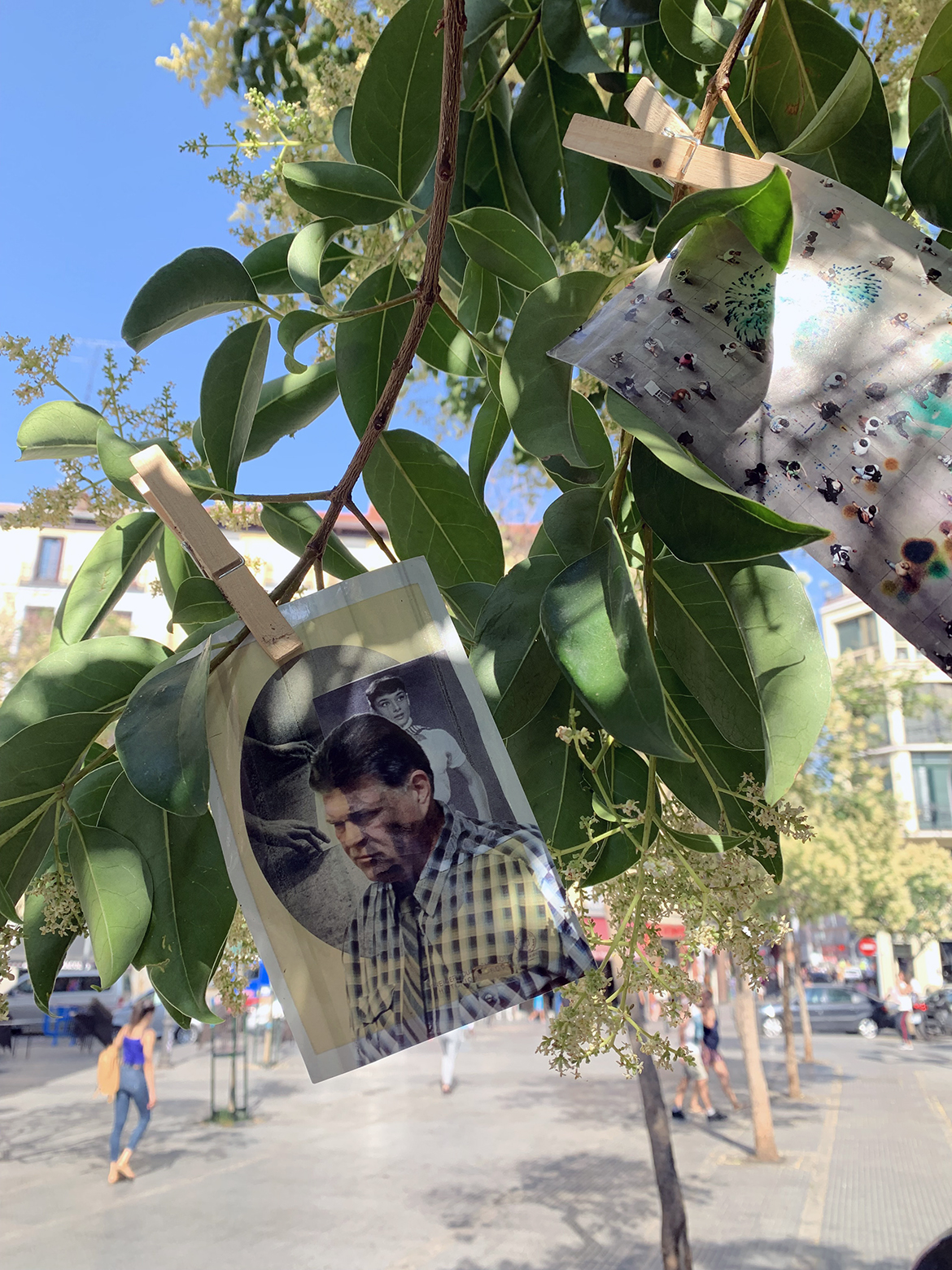
Unique art (Courtesy Fred Cray)
Brooklyn Magazine