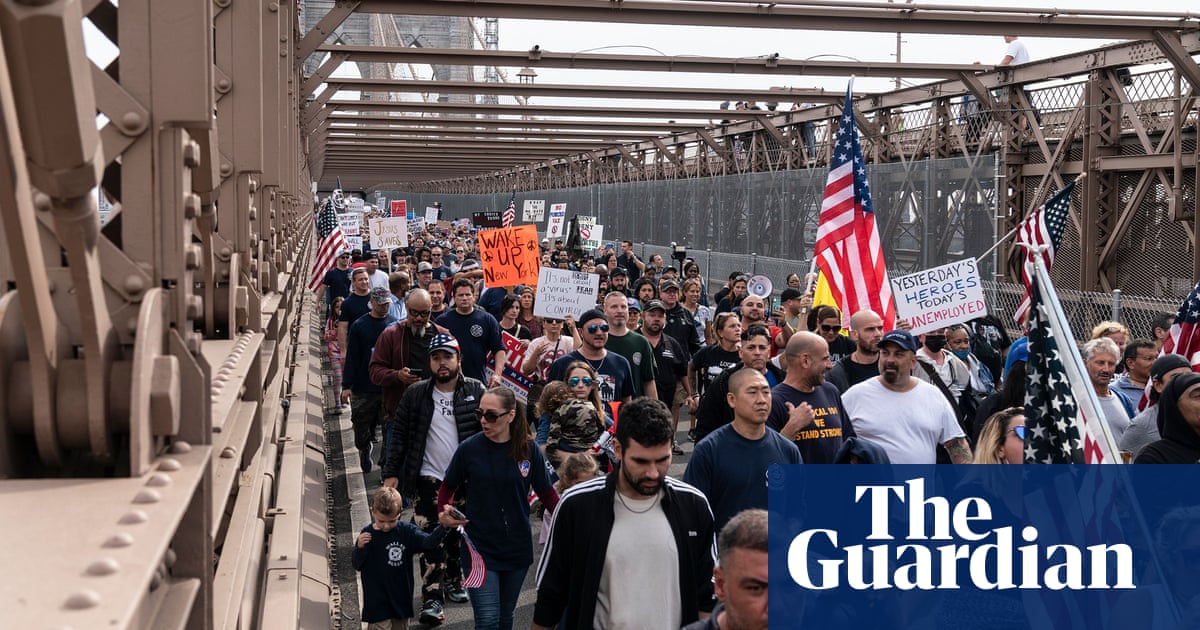
When political pundits predicted a national “red wave” in the midterm elections, they never imagined that one of the few areas it would actually surface would be southern Brooklyn, New York.
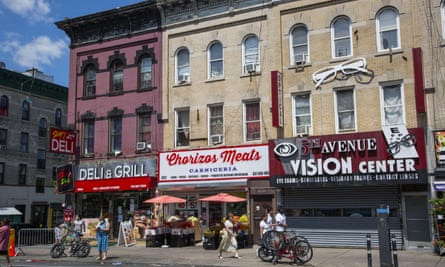
They weren’t imagining Sunset Park, a working-class area where nearly three in four residents are people of color: a tight-knit Mexican community on its west side and a fast-growing Chinese community to the east, with plenty of mouth-watering taquerias and hand-pulled noodle joints. At the park, when it’s nice out, Latin dance music intermingles with old Mandarin pop songs until the sun goes down.
Or Bensonhurst, further south, where old-school pizza joints have been replaced by boba shops and Asian vegetable stalls, drawing shoppers with pushcarts under a clattering overhead train.
But it was in immigrant enclaves like these that Republicans overperformed by as many as 30 points compared with four years ago, building on steady rightward trends in nearby Russian and Orthodox Jewish communities. Altogether, the GOP racked up enough votes to flip three state assembly seats in southern Brooklyn and push candidate Lee Zeldin within six points of the governor’s mansion, the best performance for a Republican in 28 years, stunning the state’s political elites.
Among those surprised was Joe Borelli, a 40-year-old rightwing city councilman and longtime Trump ally from Staten Island. “It was hard for me, even as a student of politics, to compute that we could flip some of these districts,” Borelli told me. “It was shocking to me how far we’ve actually gone in engaging some of those voters.”
Statewide polls found midterm elections voters ranked crime as the most urgent issue, and southern Brooklyn has been no exception. Crime statistics paint a more complicated picture. Like in the rest of the country, homicide rates in New York have ticked up since the pandemic. They also remain at historic lows for the city – on par today with the homicide rates in American suburbs.
But media coverage of New York’s crime has swelled dramatically. In July, a Bloomberg report found local tabloids like the New York Post mentioned violent crime six times more often after the election of the city’s cop-turned-mayor Eric Adams, a Democrat who has also made violent crime a focus of his speeches.
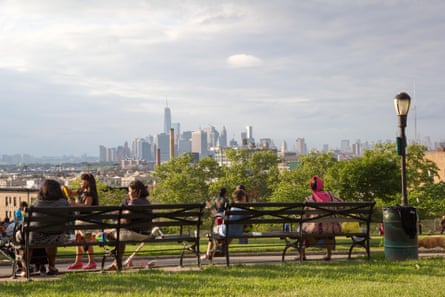
So it seemed to confirm the trend in April when a gunman opened fire on passengers in a subway car in Sunset Park, injuring 10 people and grabbing global headlines. The 62-year-old shooter was captured the next day, but it shook the neighborhood – particularly Chinese American residents, already on edge over a pandemic-era surge in reported assaults against Asian Americans.
Whether accurate or not, the narrative of New York City spiraling into violent chaos seems to have played in Republicans’ favor. Top Democrats have been stuck in a debate over how to respond: Adams has ordered more policing while blaming violent crime on bail reform – a progressive policy backed by Governor Kathy Hochul – which state data shows hasn’t increased recidivism. The confusion has presented an opportunity for Republicans like Adams’ challenger, Curtis Sliwa, and Hochul’s opponent, Lee Zeldin, who have slammed Democrats as “soft on crime” and called loudly for the harsher treatment of suspected offenders. And they’ve taken that pitch directly to immigrant neighborhoods in southern Brooklyn, drawing large rallies of enthusiastic new supporters.
That includes Yiatin Chu. At a Bensonhurst coffee shop called Cafe Gossip, Chu, a 55-year-old political activist, tells me how she was a liberal who went through a conservative awakening in the last few years. She says Asian immigrants have long been goaded into voting Democratic by non-profit social services, but in recent years voters like her have grown wrathful over bail reform, along with moves by Adams’ Democratic predecessor, Bill de Blasio, to open new homeless shelters and a high-rise jail in Chinatown. She’s even angrier over his proposal to end an admissions test that has enabled Asian American students to dominate the city’s top high schools. “It’s about self-interest and self-interest of your family, self-interest of your community,” Chu said. And the Republican party “is at the very least paying attention to us and talking to us”.
This year, Chu founded a political club called Asian Wave, which in November instructed thousands of voters through the Chinese messaging app WeChat to vote for Republicans down the line. One of them was a virtually unknown candidate named Lester Chang, who ended up toppling Peter Abbate, a Democratic state assemblyman who has represented Sunset Park and surrounding neighborhoods since 1987. Chang, a former navy officer and longtime Chinatown resident, had run two failed races in Manhattan before switching to run in Brooklyn this year. “Manhattan is solidly blue,” he said. “So I tried here in Brooklyn because I saw I had a chance.” He claims to have spent just $25,000 on his victory – buoyed by teams of enthusiastic Chinese American volunteers.
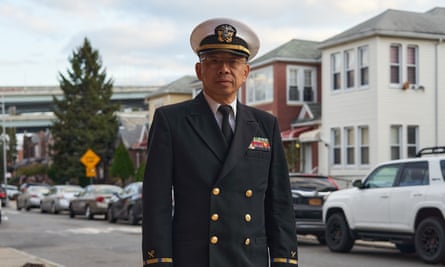
Chang, who is 61, says he won by knocking on doors and asking voters if they felt better off than two years ago. “The theme is anger, simple anger, especially for crime,” he tells me. “They don’t feel safe anymore, especially going to the subway.” To fix that, Chang wants to build a “transition center” to house homeless people next to the city’s notoriously unsafe prison on Rikers Island, where 14 detainees have died this year. Chang also wants to deploy a “minimum of 3,000 national guard soldiers to guard every single subway station, platform, cars and buses, carrying long and small guns”, which he likens approvingly to the militarized cops in China.
“Everyone I talk to,” he says, emphasizing each word: “They. Love. That. Idea.”
For years, social scientists have found the perception of crime is influenced by consuming negative news, and that perceptions of crime influence one’s sense of safety more than actual crime. That could help explain why the Republican narratives found traction this year in the areas just outside of New York City – where violent crime is rare, but urban chaos can feel frighteningly close. As Staten Island’s Borelli puts it: “Every household in my district has at least one person who commutes to another borough for work. And they see and witness the degradation of a lot of the general sense of order that New York had just three years ago.”
In the Hudson Valley, known for its quaint colonial hamlets an hour north of the city, the Republican Mike Lawler ousted Sean Patrick Maloney after months of hammering the Democrats’ congressional campaign chair over bail reform, in one of the biggest political upsets of the year. Attacks on crime also helped Republicans flip two congressional seats in Long Island, the wealthy suburb directly to New York City’s east.
The GOP also made gains in Staten Island, New York City’s whitest borough. Connected to southern Brooklyn by the Verrazano Bridge and Manhattan by only a ferry, Staten Island is a suburb where most own their homes and drive cars, unlike the renters and strap-hangers who fill the rest of the city. Instead of a compact city grid, Staten Island has sparse, rolling boulevards lined with ranch homes, Victorian mansions, and American flags. Republicans flipped one of the few Democratic state assembly districts here in November, electing a Republican known for erecting a giant pro-Trump statue on his mansion’s front lawn.
But Borelli is even more excited by the Republican surge in southern Brooklyn, which he says is proof the party can hold its own in urban neighborhoods. That could have big implications in battleground states like Pennsylvania, where residents are concentrated in left-leaning Philadelphia and Pittsburgh. “We don’t have to win the vote in every city, but we can lessen the margins in the city to be more competitive statewide. And this should be the plan for the Republican party going forward.”
The real test may be a neighborhood called Bay Ridge. Here at the end of the R subway line, just south of Sunset Park, you won’t find trendy lofts or cramped tenement buildings but neat limestone row houses and single-family homes. The area still carries an old reputation as a conservative white enclave; that’s been challenged in recent years by an influx of Arab, Asian and Latino immigrants, as well as millennials seeking cheaper rent. Now, bars aimed at Irish retirees share streets with Palestinian cafes full of diverse young people. In recent elections, votes have split almost evenly between the left and right, creating tension over the neighborhood’s political identity.
Tanya, a white resident in her 30s who calls herself a “pragmatic leftist”, says she fell in love with Bay Ridge’s small-town feel when she moved in 10 years ago, but in recent years the conservatism has become “pretty in your face”. “Thin blue line flags, ‘Let’s Go Brandon’ banners, Maga hats, Trump 2024 posters can be seen around the neighborhood. There’s a house that has a big inflatable Santa in military fatigues every Christmas season, and another plays the national anthem off their balcony at the same time every day.” Last week, she says, some people set up a booth outside the grocery store promoting rightwing conspiracy theories. “I walked by them as fast as I could and didn’t engage. You can’t reach those people.”
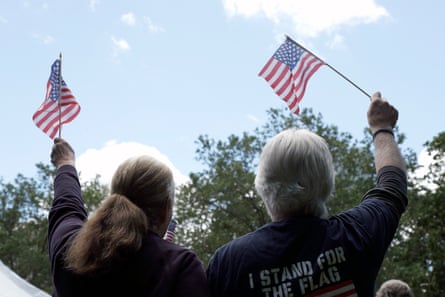
C, a progressive-leaning Bay Ridge homeowner in his 40s who asked not to use his full name, said that the neighborhood was filled with “old guard south Brooklynites” who “feel like they’re being forced out” by newer immigrants of color. These residents “don’t think they’re racists and are often kind and charitable people. But since I’m white they think they can tell me at the bar how ‘lack of education and role models lead Blacks into crime’, or how when we moved in they were ‘glad we weren’t Arab, Asian, or Mexican because they’re ruining the neighborhood’.”
Bay Ridge’s liberal people of color mostly avoid confrontation. Chris Live, a 43-year-old left-leaning Black and Puerto Rican resident who grew up in the Afro-Caribbean neighborhood of Flatbush, tells me his friends warned him against moving to Bay Ridge 10 years ago. But he says he feels secure here: “People know you and tend to look out for each other.” He doesn’t take the conservativism personally. “If I walk into a bar and I see somebody with a Maga hat on, if that’s the only seat in the building, I’m sitting next to him, but I’m not going to engage.” Once, he encountered a drunk man in a corner store who made a racist joke using the N-word. “I’m pissed, but I just walked out,” Live says. “I thought, ‘This guy’s out of his mind. He doesn’t represent this neighborhood to me.’”
How do you represent the neighborhood? The Democratic city councilman Justin Brannan, a 44-year-old former punk guitarist, says the divisions didn’t feel nearly as stark when he founded the Bay Ridge Democrats in 2012. “I was surrounded by Republican elected officials. We didn’t agree on much of anything, but we weren’t at each other’s throats and shit.” Trump’s election changed that: “It gave everyone this false license to be a complete asshole, and the national climate seeped into the local conversation. Now I can’t talk about how I got a pothole filled for Mrs O’Leary without someone spitting in my face about George Soros and Hillary’s fucking laptop or whatever. And it’s really sad that demagogues can turn people into enemies, when we’re not enemies.”
Brannan – who signs his emails “Love all, serve all” – knows he may not be able to persuade Bay Ridge’s longtime rightwingers. But he and other local Democrats are worried about how newer arrivals might swing. The state senator Andrew Gounardes, a Bay Ridge Democrat narrowly elected in 2018, says he and Brannan have been “sounding the alarm for years” about southern Brooklyn’s rising conservatism. “In particular, we’ve been saying that the Democratic party needs to be investing more in connecting with and relating to Asian voters, who make up a growing population in southern Brooklyn. So it’s not a surprise that the day after the election, you see a sea of red, because the other party was the only party talking to these people.”
To succeed in southern Brooklyn, they argue, Democrats should listen to immigrants, not deny their anxieties about safety. “No victim of a crime or witness to a crime wants to hear about statistics and data that says crime is low,” Brannan says. Instead, he suggests, Democrats should advocate for policing that treats communities of color “with dignity and respect” and emphasize rebuilding communities’ social safety nets, which were “blown wide open” by the pandemic. (As the city council’s finance chair, Brannan notes, he has helped Bay Ridge build four new public schools, and there’s a new hospital on the way.)
The councilman points to other signs of progressive change, like Gay Ridge, a queer neighborhood organization formed by residents in 2019. This year, Gay Ridge hosted its first Pride event, which drew more than 1,000 attendees from across the city. The group has organized mutual aid efforts, game nights, and park cleanups – and is hoping to turn a strip of vacant storefronts near Bay Ridge’s Pier 69 into a queer business district they’re nicknaming “Gay Ridge Ave”.
McKenzie Keating, a 49-year-old organizer who came out as trans three years ago after living in Bay Ridge for nine years, believes visibility is a kind of safety. “I love walking up and down Third Avenue. Even if it starts off in a negative place, people seeing me every day – with my partner, with my kid, with my groceries – when shit does go down, when they’re in that voting booth, hopefully they’ll say, ‘OK, who do I see as my neighbor? And I’m going to vote for their safety.”
In the wake of the election, Sunset Park feels a little quieter. The temperatures have dipped, and outside the Chinese beauty stores and bakeries, Lee Zeldin signs have been chucked in the trash. So has a banner with big Chinese characters that reads: “If you don’t vote, don’t complain.”
Despite the red wave here, Chu says her side remains the underdog. “No matter how strong the Chinese community, even if we were to get a dozen people elected among the state assembly and city council, that’s still a small, small portion. So unless we also get the attention of the non-Asian electeds, we’re not going to be able to affect policy.” It’s a point Lester Chang nods to as well when he tells me that his victory has made him “the highest-ranking elected Asian Republican in the state”. As a minority in the minority, he says, “the best I can do is be a squeaky wheel for my constituents and get those Democrats to come along with us and get things solved”.
If there’s a part of New York where bipartisanship can work, maybe it’s southern Brooklyn. That’s what Chris Live tells me as we’re chatting on a windy afternoon outside his Bay Ridge home. In spite of the political tensions, it’s a great place, he keeps saying: “It feels like one of the last true neighborhoods, where, you know, your neighbors bring you food.” He adds that I should consider moving here.
“My rent is good. It’s a friendly neighborhood, it’s a safe neighborhood, and I don’t attribute that to any political party. We have a lot of parks. A great view of the Verrazzano Bridge. And as long as the red wave didn’t turn into a red curtain, I’d be fine here for the foreseeable future.”