
Twitter headquarters in San Francisco on Nov. 29, 2022.
Photo: David Paul Morris/Bloomberg via Getty Images
The votes are in, the people have spoken, and Dominion has chosen the winner. Elon Musk will be stepping down as CEO of Twitter!
Should I step down as head of Twitter? I will abide by the results of this poll.
— Elon Musk (@elonmusk) December 18, 2022
As of the moment this was written, there’s been no confirmation from Musk that he’ll actually follow through on this, and if so, when. It will certainly be interesting to see if he does. But also, who cares? Ultimately it makes little or no difference.
It’s important at moments like this to remember how capitalism works. Ready? Here it is: The people who own corporations decide what the corporations do. These owners usually hire a board of directors, which in turn hires the company’s chief executive officer. If the board doesn’t like the CEO’s performance, they replace him or her. If the owners don’t like the board, they replace them.
Of course, it can get more complicated than this. In a publicly traded company — i.e., one in which anyone can buy shares at the current price on a stock market — there’s often extremely diffuse ownership. The largest shareholders in many of America’s companies now are index funds such as those offered by Vanguard, which in turn are owned by millions of people. This often creates what’s called a “principal-agent problem,” a situation in which the principals (in this case, the company’s owners) have a hard time exerting control over their agent (the management). If you have a 401(k), you almost certainly own teeny-tiny amounts of all of America’s biggest companies but have no influence over or even knowledge of how they’re run. Corporate managers constantly take advantage of this dynamic to enrich themselves at the expense of their company’s owners (not to mention at the expense of nonmanagement employees).
There are also anomalous corporate structures such as that of Meta, aka Facebook. Meta has Class A shares, which are publicly traded and provide one vote each in corporate governance matters. And over the past year, the value of Meta’s Class A stock has declined almost 70 percent. With a normal company, Mark Zuckerberg, who owns only about 13 percent of Meta’s Class A stock, would be facing a shareholder revolt and likely be ousted as CEO. But Meta also has Class B shares, which aren’t publicly traded and get 10 votes per share. Zuckerberg owns 90 percent of the company’s Class B shares, which ultimately gives him about 60 percent of the voting power over what the company does. Hence he is autonomous and unfireable.
Neither of these situations apply to Twitter, however. It is privately held, meaning that you can’t just call up a stockbroker and buy some shares in it. There is only one class of stock, but that’s fine for Musk, because he owns the majority of it. He is free to appoint anyone he wants to run the company. After he bought it, he appointed himself. But even if he now abides by this poll and hires someone else, he will still ultimately be in charge. If he doesn’t like a new CEO’s performance for any reason or no reason, he can replace them.
The main trouble is simply that Twitter is a bad business, purely as a business.
This hypothetical person will then face exactly the same problems that Musk faced — except with Musk breathing down their neck every second of every day. The main trouble is simply that Twitter is a bad business, purely as a business. It’s made a yearly profit just twice since it went public in 2013: in 2018 and 2019. In 2020 it lost $1 billion, then another $222 million in 2021. Musk took this money pit and added more suction by borrowing $12 billion to complete his purchase, generating $1.2 billion in additional annual costs for the company with the interest on the debt.
It is true that Musk exacerbated Twitter’s inherent problems by terrifying its advertisers, which in the pre-Musk era provided 90 percent of Twitter’s revenues. In theory, a talented new CEO could try to turn back time by going to Twitter’s ad clientele and telling them: Look, our previous chief executive was psychologically maimed by his father and is a deeply troubled weirdo. We definitely understand your concerns about him, but fortunately he’s out of the picture now.
Except Musk wouldn’t be out of the picture. Everyone in the room would know that the new CEO might be fired by tweet before the meeting was over.
And there are no other plausible sources of income on the horizon with Twitter as it currently exists. Twitter Blue users send the company $8 a month but see half the ads; they also cost money to acquire and verify. It’s plausible that the company is barely breaking even on each new blue checkmark.
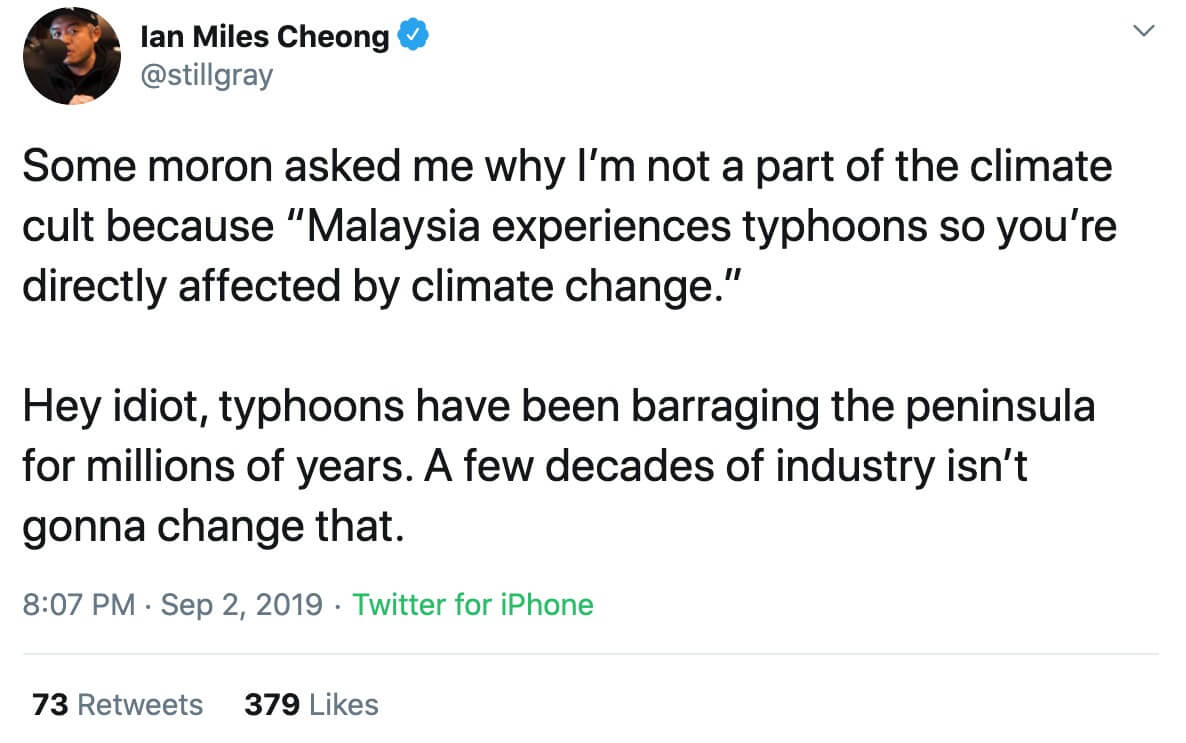
Incredibly enough, the gaming journalist, global-warming denier, and extremely odd person Ian Miles Cheong got it completely right when he told Musk this:
True
— Elon Musk (@elonmusk) December 18, 2022
In other words, Twitter can only survive if it turns itself into a totally different company. That’s not impossible — for instance, before Musk took over, Twitter explored the possibility of becoming a competitor to adult OnlyFans. There’s a lot of money there, with the adult content creator site projecting net revenue of $2.5 billion this year. On the other hand, that would guarantee that almost all large advertisers would flee the platform. And it would certainly come as a surprise to Musk’s legion of right-wing fans, as well as Tesla stockholders.
So in the end, all the cataclysms facing Twitter are structural issues that no other human being can likely solve, rather than — as tempting as it is to think — flaws inherent to Musk personally. You can replace one brick in this wall with another brick, but it’s still probably going to be swamped by the tsunami of capitalism.
All that said, there might be one possible path forward for Twitter, one that could enhance it as a venue for civic discourse and free speech: non-capitalistic ownership, by the public or its workers or both. Unfortunately, this is the one direction in which we can be absolutely certain Musk will not go.
Should Twitter be made into a public utility and/or worker owned?
To @elonmusk and @TwitterSupport please pay attention.— Jaybefaunt???? (@Jaybefaunt) December 19, 2022
The post Who Cares Whether Elon Musk Is CEO of Twitter? He OWNS It. appeared first on The Intercept.