The Orthodox Jewish communities in the U.S. and Israel and their leadership groups are deeply infiltrated by Putin’s agents. These matters are serious, and they have to be properly investigated and addressed.
The KGB (which always had a strong “zhidovskiy” element in it, and it always showed) extended their ugly stinking tentacles in the form and the way of the Russian Jewish emigration of the most recent waves, staring in 1990-s, to the U.S. and Israel. That was their Trojan Horse, and their revenge for the defeat, economic and ideological, in the Cold War. And they did that by latching on to the existing Jewish communities in the U.S., apparently mostly the Orthodox ones, using the religion as the pretense and the very convenient cover. The Russian Jews used to go the Communist Party meetings, and now, in America, they started to attend their synagogues dutifully and without any scruples, maybe even as the needed substitute for those Party meetings. It looks like they, the KGB, developed the functional, mafia-like network of their agents, and, in fact, grew in and together, integrated with the Russian-Jewish (“Red”) Mafia. The Darwinian pragmatism and the survival skills honed in the USSR were their guiding lights and the only “ideology”. And the “religion – crime connection” (apparently the ancient and the deep one), worked out for the Russian Jews no worse than the Catholicism for the Italian Cosa Nostra.
Today we are dealing with the complications and the sick sequelae of this invisible (or unseen, or largely neglected and ignored) invasion.
M.N.
12.2.17
Links

- What’s behind the Russian president’s close relationship with an Orthodox Jewish sect?
- The Happy-Go-Lucky Jewish Group That Connects Trump and Putin
_________________________________


__________________________
Chabad of Port Washington, a Jewish community center on Long Island’s Manhasset Bay, sits in a squat brick edifice across from a Shell gas station and a strip mall. The center is an unexceptional building on an unexceptional street, save for one thing: Some of the shortest routes between Donald Trump and Vladimir Putin run straight through it.
Two decades ago, as the Russian president set about consolidating power on one side of the world, he embarked on a project to supplant his country’s existing Jewish civil society and replace it with a parallel structure loyal to him. On the other side of the world, the brash Manhattan developer was working to get a piece of the massive flows of capital that were fleeing the former Soviet Union in search of stable assets in the West, especially real estate, and seeking partners in New York with ties to the region.
Story Continued Below
Their respective ambitions led the two men—along with Trump’s future son-in-law, Jared Kushner—to build a set of close, overlapping relationships in a small world that intersects on Chabad, an international Hasidic movement most people have never heard of.
Starting in 1999, Putin enlisted two of his closest confidants, the oligarchs Lev Leviev and Roman Abramovich, who would go on to become Chabad’s biggest patrons worldwide, to create the Federation of Jewish Communities of Russia under the leadership of Chabad rabbi Berel Lazar, who would come to be known as “Putin’s rabbi.”
A few years later, Trump would seek out Russian projects and capital by joining forces with a partnership called Bayrock-Sapir, led by Soviet emigres Tevfik Arif, Felix Sater and Tamir Sapir—who maintain close ties to Chabad. The company’s ventures would lead to multiple lawsuits alleging fraud and a criminal investigation of a condo project in Manhattan.
Meanwhile, the links between Trump and Chabad kept piling up. In 2007, Trump hosted the wedding of Sapir’s daughter and Leviev’s right-hand man at Mar-a-Lago, his Palm Beach resort. A few months after the ceremony, Leviev met Trump to discuss potential deals in Moscow and then hosted a bris for the new couple’s first son at the holiest site in Chabad Judaism. Trump attended the bris along with Kushner, who would go on to buy a $300 million building from Leviev and marry Ivanka Trump, who would form a close relationship with Abramovich’s wife, Dasha Zhukova. Zhukova would host the power couple in Russia in 2014 and reportedly attend Trump’s inauguration as their guest.
With the help of this trans-Atlantic diaspora and some globetrotting real estate moguls, Trump Tower and Moscow’s Red Square can feel at times like part of the same tight-knit neighborhood. Now, with Trump in the Oval Office having proclaimed his desire to reorient the global order around improved U.S. relations with Putin’s government—and as the FBI probes the possibility of improper coordination between Trump associates and the Kremlin—that small world has suddenly taken on outsize importance.
Trump’s kind of Jews
Founded in Lithuania in 1775, the Chabad-Lubavitch movement today has adherents numbering in the five, or perhaps six, figures. What the movement lacks in numbers it makes up for in enthusiasm, as it is known for practicing a particularly joyous form of Judaism.
Mort Klein, president of the Zionist Organization of America, recalled having this trait impressed upon him during one family wedding at which the two tables occupied by his first cousins, Chabad rabbis, put the rest of the celebrants to shame. “They were dancing up a storm, these guys. I thought they were black. Instead they’re just black-hat,” Klein said, referring to their traditional Hasidic garb.
Despite its small size, Chabad has grown to become the most sprawling Jewish institution in the world, with a presence in over 1,000 far-flung cities, including locales like Kathmandu and Hanoi with few full-time Jewish residents. The movement is known for these outposts, called Chabad houses, which function as community centers and are open to all Jews. “Take any forsaken city in the world, you have a McDonald’s and a Chabad house,” explained Ronn Torossian, a Jewish public relations executive in New York.
Chabad adherents differ from other Hasidic Jews on numerous small points of custom, including the tendency of Chabad men to wear fedoras instead of fur hats. Many adherents believe that the movement’s last living leader, Rabbi Menachem Mendel Schneerson, who died in 1994, is the messiah, and some believe he is still alive. Chabad followers are also, according to Klein, “remarkable” fundraisers.
As the closest thing the Jewish world has to evangelism—much of its work is dedicated to making Jews around the world more involved in Judaism—Chabad serves many more Jews who are not full-on adherents.
According to Schmuley Boteach, a prominent rabbi in New Jersey and a longtime friend of Democratic Sen. Cory Booker, Chabad offers Jews a third way of relating to their religious identity. “You have three choices as a Jew,” he explained. “You can assimilate and not be very affiliated. You can be religious and Orthodox, or there’s sort of a third possibility that Chabad offers for people who don’t want to go the full Orthodox route but do want to stay on the traditional spectrum.”
This third way may explain the affinity Trump has found with a number of Chabad enthusiasts—Jews who shun liberal reform Judaism in favor of traditionalism but are not strictly devout.
“It’s not a surprise that Trump-minded people are involved with Chabad,” said Torossian. “Chabad is a place that tough, strong Jews feel comfortable. Chabad is a nonjudgmental place where people that are not traditional and not by-the-book feel comfortable.”
Story Continued Below
He summarized the Chabad attitude, which is less strict than the Orthodox one, as, “If you can’t keep all of the commandments, keep as many as you can.”
Torossian, who coincidentally said he is Sater’s friend and PR rep, also explained that this balance is particularly appealing to Jews from the former Soviet Union, who appreciate its combination of traditional trappings with a lenient attitude toward observance. “All Russian Jews go to Chabad,” he said. “Russian Jews are not comfortable in a reform synagogue.”
Putin’s kind of Jews
The Russian state’s embrace of Chabad happened, like many things in Putin’s Russia, as the result of a factional power struggle.
In 1999, soon after he became prime minister, Putin enlisted Abramovich and Leviev to create the Federation of Russian Jewish Communities. Its purpose was to undermine the existing umbrella for Russia’s Jewish civil society, the Russian Jewish Congress, led by oligarch Vladimir Gusinsky, a potential threat to Putin and President Boris Yeltsin. A year later, Gusinsky was arrested by Putin’s government and forced into exile.
At the time, Russia already had a chief rabbi as recognized by the Russian Jewish Congress, Adolf Shayevich. But Abramovich and Leviev installed Chabad rabbi Lazar at the head of their rival organization. The Kremlin removed Shayevich from its religious affairs council, and ever since it has instead recognized Lazar as Russia’s chief rabbi, leaving the country with two rival claimants to the title.
The Putin-Chabad alliance has reaped benefits for both sides. Under Putin, anti-Semitism has been officially discouraged, a break from centuries of discrimination and pogroms, and the government has come to embrace a state-sanctioned version of Jewish identity as a welcome part of the nation.
As Putin has consolidated his control of Russia, Lazar has come to be known derisively as “Putin’s rabbi.” He has escorted the Russian leader to Jerusalem’s Western Wall and attended the opening ceremony of the Sochi Olympics, Putin’s pet project, on the Jewish Sabbath. Putin returned that favor by arranging for Lazar to enter the stadium without submitting to security checks that would have broken the rules for observing Shabbat.
In 2013, a $50 million Jewish Museum and Tolerance Center opened in Moscow under the auspices of Chabad and with funding from Abramovich. Putin donated a month of his salary to the project, while the Federal Security Service, the successor to the KGB, pitched in by offering relevant documents from its archives.
In 2014, Lazar was the only Jewish leader present at Putin’s triumphal announcement of the annexation of Crimea.
But the rabbi has paid a price for his loyalty to Putin. Since the annexation, his continued support for the Russian autocrat has caused a rift with Chabad leaders in Ukraine. And for years, the Russian government has defied an American court order to turn over a trove of Chabad texts called the “Schneerson Library” to the Chabad Lubavitch headquarters in Crown Heights, Brooklyn. Shortly after the opening of the tolerance museum, Putin ordered the collection transferred there instead. The move made Lazar the custodian of a prized collection that his Brooklyn comrades believe is rightfully theirs.
If Lazar has any qualms about his role in all the intra-Chabad drama, he hasn’t let on publicly. “Challenging the government is not the Jewish way,” the rabbi said in 2015.
Trump, Bayrock, Sapir
Meanwhile, on the other side of the world, as Trump looked for business and investors in the former Soviet Union during the first years of this century, he struck up an enduring relationship with a firm called Bayrock-Sapir.
Bayrock was co-led by Felix Sater, a convicted mob associate.
Sater and another Bayrock employee, Daniel Ridloff, who like Sater later went on to work directly for the Trump Organization, belong to the Port Washington Chabad house. Sater told POLITICO Magazine that in addition to serving on the board of the Port Washington Chabad house, he sits on the boards of numerous Chabad entities in the U.S. and abroad, though none in Russia.
The extent of Sater’s ties to Trump is a matter of some dispute. Working out of Trump Tower, Sater partnered with the celebrity developer on numerous Trump-branded developments and scouted deals for him in the former Soviet Union. In 2006, Sater escorted Trump’s children Ivanka and Don Jr. around Moscow to scour the city for potential projects, and he worked especially closely with Ivanka on the development of Trump SoHo, a hotel and condominium building in Manhattan whose construction was announced on “The Apprentice” in 2006.
Story Continued Below
In 2007, Sater’s stock fraud conviction became public. The revelation did not deter Trump, who brought him on as “a senior advisor to the Trump Organization” in 2010. In 2011, a number of purchasers of Trump SoHo units sued Trump and his partners for fraud and the New York attorney general’s office opened a criminal inquiry into the building’s marketing. But the purchasers settled and agreed not to cooperate with the criminal investigation, which was subsequently scuttled, according to the New York Times. Two former executives are suing Bayrock alleging tax evasion, money laundering, racketeering, bribery, extortion and fraud.
Under oath, Sater has described a close relationship with the Trumps, while Trump has testified under oath that he barely knew Sater and would not be able to pick his face out in a crowd. Several people who worked closely with Sater during this period and who agreed to speak on condition of anonymity, citing fear of retaliation from both men, scoffed at Trump’s testimony, describing frequent meetings and near-constant phone calls between the two. One person recalled numerous occasions on which Trump and Sater dined together, including at the now-defunct Kiss & Fly in Manhattan’s Meatpacking District.
“Trump called Felix like every other day to his office. So the fact that he’s saying he doesn’t know him, that’s a lot of crap,” said a former Sater colleague. “They were definitely in contact always. They spoke on the phone all the time.”
In 2014, the Port Washington Chabad house named Sater its “man of the year.” At the ceremony honoring Sater, the chabad’s founder, Shalom Paltiel, recounted how Sater would spill his guts to him about his adventures working as a government cooperator on sensitive matters of national security.
“I only recently told Felix I really didn’t believe most of it. I thought perhaps he watched too many James Bond movies, read one too many Tom Clancy novels,” said Paltiel at the ceremony. “Anyone who knows Felix knows he can tell a good story. I simply did not put too much credence to them.”
But Paltiel went on to recount receiving special clearance years later to accompany Sater to a ceremony at the federal building in Manhattan. There, said Paltiel, officials from every American intelligence agency applauded Sater’s secret work and divulged “stuff that was more fantastic, and more unbelievable, than anything he had been telling me.” A video of the event honoring Sater has been removed from the Port Washington Chabad house’s website but is still available on YouTube.
When I contacted Paltiel for this article, he hung up the phone as soon as I introduced myself. I wanted to ask him about some of the connections I’d come across in the course of my reporting. In addition to his relationship with Sater, Paltiel is also close to “Putin’s rabbi” Lazar, calling Lazar “my dear friend and mentor” in a short note about running into him at Schneerson’s gravesite in Queens.
According to Boteach, this is unsurprising, because Chabad is the sort of community where everybody knows everybody else. “In the world of Chabad, we all went to Yeshiva together, we were all ordained together,” Boteach explained. “I knew Berel Lazar from yeshiva.”
The Port Washington Chabad house has another Bayrock tie. Among its top 13 benefactors, its “Chai Circle,” as listed on its website, is Sater’s partner, Bayrock founder Tevfik Arif.
Arif, a former Soviet bureaucrat turned wealthy real estate developer, owns a mansion in Port Washington, an upscale suburb, but he makes a curious patron for the town’s Chabad. A Kazakh-born citizen of Turkey with a Muslim name, Arif is not Jewish, according to people who have worked with him. In 2010, he was arrested in a raid on a yacht in Turkey that once belonged to the founder of the modern Turkish state, Mustafa Kamal Ataturk, and charged with running an international underage prostitution ring. Arif was later cleared of the charges.
Before the scandal on Ataturk’s yacht, Arif partnered closely with Trump, Ivanka Trump and Sater in the development of Trump SoHo along with the Sapir family, a New York real estate dynasty and the other half of Bayrock-Sapir.
Its patriarch, the late billionaire Tamir Sapir, was born in the Soviet state of Georgia and arrived in 1976 in New York, where he opened an electronics store in the Flatiron district that, according to the New York Times, catered largely to KGB agents.
Trump has called Sapir “a great friend.” In December 2007, he hosted the wedding of Sapir’s daughter, Zina, at Mar-a-Lago. The event featured performances by Lionel Ritchie and the Pussycat Dolls. The groom, Rotem Rosen, was the CEO of the American branch of Africa Israel, the Putin oligarch Leviev’s holding company.
Story Continued Below
Five months later, in early June 2008, Zina Sapir and Rosen held a bris for their newborn son. Invitations to the bris described Rosen as Leviev’s “right-hand man.” By then, Leviev had become the single largest funder of Chabad worldwide, and he personally arranged for the bris to take place at Schneerson’s grave, Chabad’s most holy site.
Trump attended the bris. A month earlier, in May 2008, he and Leviev had met to discuss possible real estate projects in Moscow, according to a contemporaneous Russian news report. An undated photograph on a Pinterest account called LLD Diamond USA, the name of a firm registered to Leviev, shows Trump and Leviev shaking hands and smiling. (The photograph was first pointed out by Pacific Standard.)
That same year, Sapir, an active Chabad donor in his own right, joined Leviev in Berlin to tour Chabad institutions in the city.
Jared, Ivanka, Roman, Dasha
Also present at the Sapir-Rosen bris was Kushner, who along with his now-wife Ivanka Trump has forged his own set of ties to Putin’s Chabad allies. Kushner’s family, which is Modern Orthodox, has long been highly engaged in philanthropy across the Jewish world, including to Chabad entities, and during his undergraduate years at Harvard, Kushner was active in the university’s Chabad house. Three days before the presidential election, the couple visited Schneerson’s grave and prayed for Trump. In January, the couple purchased a home in Washington’s Kalorama neighborhood and settled on the city’s nearby Chabad synagogue, known as TheSHUL of the Nation’s Capital, as their house of worship.
In May 2015, a month before Trump officially entered the Republican presidential primary, Kushner bought a majority stake in the old New York Times building on West 43rd Street from Leviev for $295 million.
Kushner and Ivanka Trump are also close with Abramovich’s wife, Dasha Zhukova. Abramovich, an industrialist worth more than $7 billion and the owner of the British soccer club Chelsea FC, is the former governor of the Russian province of Chukotka, where he is still revered as a hero. He owes his fortune to his triumphant emergence from Russia’s post-Soviet “aluminum wars,” in which more than 100 people are estimated to have died in fighting over control of aluminum refineries. Abramovich admitted in 2008 that he amassed his assets by paying billions of dollars in bribes. In 2011, his former business partner, the late Boris Berezovsky—an oligarch who had fallen out with Putin and gone on to live in exile at the Trump International on Central Park West—accused him of threats, blackmail and intimidation in a lawsuit in the United Kingdom, which Abramovich won.
Abramovich was reportedly the first person to recommend to Yeltsin that he choose Putin as his successor. In their 2004 biography of Abramovich, the British journalists Chris Hutchins and Dominic Midgely write, “When Putin needed a shadowy force to act against his enemies behind the scenes, it was Abramovich whom he could rely on to prove a willing co-conspirator.” The biographers compare the two men’s relationship to that between a father and a son and report that Abramovich personally interviewed candidates for Putin’s first cabinet. He has reportedly gifted Putin a $30 million yacht, though Putin denies it.
Abramovich’s vast business holdings and his personal life overlap with Trump’s world in multiple ways.
According to a 2012 report from researchers at Cornell University, Evraz, a firm partly owned by Abramovich, has contracts to provide 40 percent of the steel for the Keystone XL pipeline, a project whose completion was approved by Trump in March after years of delay. And in 2006, Abramovich purchased a large stake in the Russian oil giant Rosneft, a company now being scrutinized for its possible role in alleged collusion between Trump and Russia. Both Trump and the Kremlin have dismissed as “fake news” a dossier that alleges that a recent sale of Rosneft shares was part of a scheme to ease U.S. sanctions on Russia.
Meanwhile, his wife, Zhukova, has long traveled in the same social circles as Kushner and Ivanka Trump: She is a friend and business partner of Rupert Murdoch’s ex-wife Wendi Deng, one of Ivanka’s closest friends, and a friend of Karlie Kloss, the longtime girlfriend of Kushner’s brother, Josh.
Over the years, Zhukova has grown close to Jared and Ivanka themselves. In February 2014, a month before Putin illegally annexed Crimea from Ukraine, Ivanka Trump posted a photo to Instagram of herself with Zhukova, Wendi Deng, a bottle of wine, and the caption, “Thank you [Zhukova] for an unforgettable four days in Russia!” Deng was recently rumored to be dating Putin, though she denied it. Other photos from the trip show Kushner was also present in Russia at the time.
Last summer, Kushner and Ivanka Trump shared a box at the U.S. Open with Zhukova and Deng. In January, Zhukova reportedly attended Trump’s inauguration as Ivanka Trump’s guest.
Story Continued Below
On March 14, The Daily Mail spotted Josh Kushner dining with Zhukova in New York. According to the outlet, Josh Kushner “hid his face as he exited the eatery with Dasha.”
A week later, at the same time Jared Kushner and Ivanka Trump were vacationing in Aspen with her two brothers and their families, Abramovich’s plane flew from Moscow to Denver, according to a flight tracking service. Abramovich owns two properties in the Aspen area.
A spokesman for Abramovich declined to comment on the record about the Colorado overlap. The White House referred queries about the couples to a personal spokeswoman for Ivanka Trump. The spokeswoman, Risa Heller, initially indicated she would provide answers to questions about the Colorado overlap and recent contacts between the couples, but did not do so.
President Trump has reportedly sought security clearances for Kushner and Ivanka, who have taken on growing roles in his White House. For anyone else, a close personal relationship with the family of a top Putin confidant would present significant hurdles to obtaining security clearances, former high-ranking intelligence officials said, but political pressure to grant clearances to the president’s children would be likely to override any security concerns.
“Yes, such connections to Russia should matter for a clearance,” said Steve Hall, a former CIA Moscow station chief. “Question is, will they?”
“I don’t think the Trump family camp will have any trouble with security clearances, as long as there’s no polygraph involved,” said Milt Bearden, former chief of the CIA’s Eastern European division. “It’s absolutely crazy, but not going to be an issue.”
***
With Washington abuzz about the FBI’s counterintelligence investigation of Trump world’s relationship with Putin’s Kremlin, their overlapping networks remain the object of much scrutiny and fascination.
In March, the New York Times reported that Lazar had met last summer with the Trump administration’s special representative for international negotiations Jason Greenblatt, then a lawyer for the Trump Organization. The men characterized the meeting as a normal part of Greenblatt’s campaign outreach to Jewish leaders and said it included general discussion of Russian society and anti-Semitism. The meeting was brokered by New York PR rep Joshua Nass, and Lazar has said he did not discuss that meeting with the Russian government.
In late January, Sater met with Trump’s personal lawyer, Michael Cohen, to discuss a proposed Ukraine peace deal that would end U.S. sanctions on Russia, which Cohen then delivered to Trump’s then-national security adviser Michael Flynn at the White House, according to the Times. Cohen has given varying accounts of the episode.
According to one Jewish Republican who said he sees Cohen “all the time” there, Cohen himself is a regular presence at the Midtown Chabad on Fifth Avenue, a dozen blocks south of Trump Tower and a half-dozen blocks south of his current office at 30 Rockefeller Plaza.
Cohen disputed this, saying, “I’ve never been to a Chabad and I’ve never been to one in New York City either.” Cohen then said he last stepped foot in a Chabad over 15 years ago to attend a bris. He said the last Chabad-related event he attended was on March 16 at a hotel in Newark when he spoke at a dinner honoring Trump’s secretary of veterans affairs, David Shulkin. The dinner was hosted by the Rabbinical College of America, a Chabad organization.
To those unfamiliar with Russian politics, Trump’s world and Hasidic Judaism, all these Chabad links can appear confounding. Others simply greet them with a shrug.
“The interconnectedness of the Jewish world through Chabad is not surprising insofar as it’s one of the main Jewish players,” said Boteach. “I would assume that the world of New York real estate isn’t that huge either.”


 Michael Flynn’s guilty plea to lying to the FBI falls short on Russia “collusion” but points to the Trump administration acting on Israel’s behalf, says author and journalist Max Blumenthal.
Max Blumenthal is an award-winning journalist and bestselling author whose articles and video documentaries have appeared in The New York Times, The Los Angeles Times, The Daily Beast, The Nation, The Guardian, The Independent Film Channel, The Huffington Post, <a href=”http://Salon.com” rel=”nofollow”>Salon.com</a>, Al Jazeera English and many other publications. His most recent book is Goliath: Life and Loathing in Greater Israel. His other book, Republican Gomorrah: Inside The Movement That Shattered The Party, is a New York Times and Los Angeles Times bestseller. Max is co-host of the podcast Modern Rebel.
Aaron Mate: It’s the Real News. I’m Aaron Mate. Michael Flynn, the National Security Advisor to Donald Trump until his ouster just a few months into his administration, has pleaded guilty to lying to investigators looking into alleged Trump Russia ties. Flynn is the most high level member of the White House inner circle to be indicted and he is said to be cooperating with investigators. And the news has been greeted across liberal media much like it was today on the TV program The View.
Speaker 2: Breaking news.
Joy Behar: Oh my God. Oh, breaking news. ABC news Brian Ross is reporting. Michael Flynn promised full cooperation to the Mueller team and is prepared to testify that, as a candidate, Donald Trump directed him to make contact with the Russians. Yes.
Aaron Mate: But for opponents of Donald Trump, is Flynn’s indictment really something to celebrate? Well, joining me to discuss is Max Blumenthal, Senior Editor of Alternet’s Grayzone Project. Max, your reaction to Flynn’s indictment today.
Max Blumenthal: You know, my reaction is slightly different than The View panelists, who are really expressing the sensibility, or the mentality, of the id lib, or the idiot liberal, who has been kind of indoctrinated over the past 11 months to believe that Trump had colluded with Russia and that this will lead to his impeachment. We actually saw outside the courthouse where Flynn appeared, the people not only chanting “lock him up”, which is hilarious considering that Flynn, at the Republican National Convention led the “lock her up” chants about Hillary Clinton, but there was also a sign being held by one protestor or heckler, reading “People Power versus Putin Power”, as if Putin kind of controlled Michael Flynn.I mean let’s first acknowledge that this is a confirmation, this indictment of Michael Flynn’s dishonesty, his hypocrisy and his sheer idiocy. I mean, he lied to the FBI and ordinary people who lie to the FBI go to jail. He not only did that, but he did not register as a foreign agent when he took something like half a million dollars from Erdoğan’s government, the government of Turkey, in order to stage some kind of operation to possibly kidnap the person that, the exiled cleric that Erdoğan considers to be his arch nemeses. Fethullah Gülen in Pennsylvania so you can imagine like Flynn and his buddies driving around Pennsylvania trying to kidnap some cleric. It’s like the guy who couldn’t shoot straight. It’s like something out of a Woody Allen movie.Just the level of absurdity of Flynn’s activities has reached a sublime level then you have Flynn testifying before Congress that the U.S. needed to be in the driver’s seat back in 2015 to prevent Russia from setting up nuclear facilities in Egypt and elsewhere and then two weeks later he goes to Egypt and Israel on a trip paid for by a company, one of the companies that had been possibly working with the Russian government to set up, you know, nuclear plants, Flynn did not disclose that at the time when he had a security clearance.So there’s this pattern of failing to disclose activities that he’s been involved in and, you know, he has been pretty much lying ever since 2015. So that’s real, that’s corruption. There’s no way to defend Flynn on that level. The question is, is there any evidence here of collusion with Russia? Trump’s collusion with Russia. And when you actually look at the indictment, you’ve got another dud, it’s just another dud, and these duds arrive every two to three weeks and they send the id libs into a frenzy of ecstasy about having their shambolic narrative of Russia controlling the United States and colluding with Trump to subvert our otherwise shining democracy confirmed.And this confirms nothing. What it does show is that the Israeli government, through Jared Kushner, pressured Michael Flynn to approach the Russian government through Sergey Kislyak, who was the Russian Ambassador to the U.S. at the time, to use it’s position on the U.N. Security Council to stop a resolution condemning Israeli Settlement activity, which the Obama administration was going to abstain on. Something the U.S. government hasn’t done before.Jared Kushner and his family through the Kushner Family Foundation have an extensive relationship not only with the Israeli government, but with Benjamin Netanyahu himself. Netanyahu when he’s in New York would stay with the Kushner family. He would sleep in a bedroom at their house and was almost literally in bed with Jared Kushner. Kushner Family Foundation has donated extensively to the Israeli Settlement Enterprise, to very pro-Israel groups. And so you’re looking actually at Israeli collusion. The real center of influence in Washington emanates from Israel and Kushner has basically been an agent of Israeli influence. An unregistered agent of pro-Israel influence in Washington. This element of the story, which is central, has been completely ignored. And there is another point.Flynn is accused of approaching Sergey Kislyak to discuss how the U.S. and Russia, which was one of the main parties engaged in Syria, would bring the Syrian conflict to an end and take on al Qaeda and ISIS. So that U.S. and Russia are discussing deescalating a conflict that has killed somewhere around 250,000 people. At least around 100,000 on the Syrian government side, by the way. And they have successfully done so, it’s been Russian intervention in Syria at the invitation of the Syrian government that has led to the destruction of ISIS, the defeat of al Qaeda, and the end of this conflict. And refugees are now coming back, so once, just to restate that, Flynn approached Kislyak, not the other way around, to discuss deescalating a conflict. And that’s considered a major transgression now in Washington and then there’s the third point in the indictment.Flynn approached Kislyak, not the other way around, to beg Russia not to retaliate against sanctions that the Obama administration had imposed on Russia for unproven allegations that Russia hacked the Democratic National Committee’s email servers and released it to WikiLeaks. Unproven. Totally unproven, even the intelligence agencies that everyone, every Democrat worships as if they’re some kind of oracle, have just stated with high confidence that these servers were hacked by Russian intelligence agencies and none of them, not the FBI, not the NSA, none of them have examined the DNC’s email servers, none of them have demanded them. So these sanctions were imposed based on an allegation and then you have Michael Flynn, while a member of the Trump campaign, approaching the Russian Ambassador to beseech him not to retaliate.And Putin himself was actually put under pressure by the Russian Foreign Ministry at the same time to retaliate because the U.S. had kicked Russian Diplomatic personnel out of Washington, and imposed them unprecedented sanctions, Putin did not retaliate. I would say it was a fairly elegant, diplomatic move. He was gonna give a new administration a chance.In any case, Flynn lied about these communications he had with Sergey Kislyak, the communications were picked up by the NSA because Michael Flynn was in the Cayman Islands at the time and so he was abroad where the NSA has surveillance latitude and Flynn, you know, he may have been sitting on a beach after having one too many, you know, pina coladas and he engaged in really stupid activity to make this kind of call. But the nature of the call, and the content of the indictment, does not prove that there was collusion with the Russian government. It certainly doesn’t demonstrate that Russia was attempting to subvert American democracy. It does demonstrate that the Israeli government through it’s point man, Jared Kushner, was engaged in collusion, was engaged in foreign meddling, and subversion. And this, for some reason, is not the story and we know why.
Aaron Mate: Right. In terms of what it says about the actual election, which is purportedly the reason why we’re supposed to be caring about Russia and Trump. The first conversation between Flynn and Kislyak happens in December, so well after the election has happened. Let me ask you Max, it’s interesting to see that the outrage today has been over, as you mentioned, Flynn trying to negotiate or make overtures to Russia over matters that could actually deescalate tensions, which, when not viewed through a partisan lens, could be seen as positive because it’s deescalating tensions with a nuclear power, and as you said, trying to find an end to the horrific Syrian War. But, in effect, both those things were known about before. What was not known, at least to my knowledge, was the extent to which Flynn was working to subvert the U.N. Security Council vote about Israel. And it’s surprising, as you alluded to, that that’s the issue that is both new but yet has not elicited very much outrage or attention.
Max Blumenthal: Yeah, I mean, that’s just absolutely shocking that, I mean, and this has also come out through Mueller’s investigation is that Jared Kushner may have violated the Logan Act by conducting freelance diplomacy to work with the Israeli government to attempt to convince other governments to vote against the U.N. Resolution. Other governments on the Security Council. That’s how we know that Kushner was the one who was encouraging Flynn to make this call. And it’s just completely overlooked in Washington, it’s overlooked by mainstream media, not only because of the fear of that very government and it’s cut outs in Washington attacking figures in the media and attacking public figures for daring to point to Israeli influence as a nefarious and nefarious force that contravenes American interests, but because it’s a matter of American policy to allow Israel to dictate our policy with respect to the Middle East.Including in Syria and so you have elements that are deeply embedded in the national security state that have been hostile to deescalating the Syrian Civil War. These elements, you know, you could point to John Brennan from the CIA, one of his babies was the arm and equip operation to train and arm Syrian rebels who were substantially operating under the umbrella of al Qaeda, referred to as the Free Syrian Army, something that we now know was basically a mythical conglomeration of Salafi and Salafi jihadi rebels. And in 2015, when al Qaeda Syrian affiliate, Jabhat Al Nusra, took the city and the province of Idlib, in northeastern Syria, which was just a few hundred kilometers … actually I would just say, you know, a few scores of kilometers away from the Alawite Heartland. An area which al Qaeda and it’s affiliates have pledged to cleanse of non-sitting Muslims. To kill or convert the minority population of Syria.Where Christians were forced to convert or die in Idlib. Where the Jewish population in Idlib was forced to dig up their own shrines. Christians were slaughtered across Idlib. And the Syrian government panicked. You know, what Obama should have done at that point is gone to the city allies, Turkey, Saudi Arabia, Qatar and said, “Stop arming these jihadist rebels who have taken Idlib, let’s put a stop to this, this is crazy, they wanna march on Lattakia, they wanna move to Damascus and this would destroy a core country in the Middle East. It’s gone too far.” He didn’t do that. The arms continued to flow.This should have been a signal moment and that is when, in fact the arms continued to flow in the form of something like 20,000 Tow Missiles produced by Raytheon which allowed al Qaeda and it’s allies to destroy entire Syrian Army Tank Divisions. This is when the Syrian government called on Russia to intervene. And it was that Russian intervention that prevented Syria from becoming what we see today in Libya, where there are open air slave markets, where there have been the slaughter of the black population of Libya and now we see sub-Saharan African migrants being sold in open air slave markets. Refugee crisis like you’ve never seen before. This is what Russia prevented in Syria. And the U.S. by 2016, after the fall of Aleppo, or the liberation of Aleppo with Russian help, the liberation from al Qaeda and it’s allies, kind of started to get wise and decided it’s time to deescalate.John Brennan was very unhappy with this scenario, his operation was being discredited. His legacy was on the line. A lot of other figures coming out of the state department were upset at this scenario but the Trump administration was determined to do this and that’s what Flynn’s phone call with Kislyak partially dealt with and it has happened. We’ve seen deescalation zones set up around the Golan Heights, all across the [crosstalk 00:15:26]
Aaron Mate: I think we gotta, Max-
Max Blumenthal: These are coming [crosstalk 00:15:29]
Aaron Mate: Max, let me cut in there because we have to wrap, but I wanna say actually, that it’s quite possible that what Trump and Flynn are being faulted for now, in terms of Syria, is exactly what the Obama administration, despite people like John Brennan, would have done anyway. Because, as you say, the war was going so bad for them that it was obvious that they were not gonna win the outcome that they pursued. But let me ask you, Max, because we only have one minute, so getting back to Flynn and this indictment, people are saying, “Well look, why would Mueller make a plea deal with Flynn unless Flynn had something to offer him that was gonna flip and point to someone higher above him like Kushner, or even Trump, that’s possible. It’s also possible that maybe this is all Flynn has and so now they’re gonna get him on lying to the FBI so I’m wondering, where you think this is gonna go and what kind of punishment you think someone like Flynn will face? I mean lying to the FBI is a serious offense but it’s nowhere near the kind of offense of treason that many people have floated throughout this whole Russia-gate “scandal”.
Max Blumenthal: Yeah. Even though the indictment contradicts the narrative of collusion in Russian subversion of our shining democracy, the narrative will continue and this gives more fumes to the narrative in the way the mainstream media, corporate media’s gonna report this will be slightly distorted. It will obfuscate the details of the indictment. I can only go based on what’s in the indictment and it seems to show that Flynn lied to the FBI, he probably pled out on part to protect his son Michael Flynn Jr. from being, you know, indicted, or called in. And to the extent that he is going to say that Trump ordered him to make this phone call, well, the question is how does that demonstrate any illicit behavior by Trump if Trump himself was urging Flynn, who was his future National Security Council Advisor, to conduct diplomacy with Russia?I mean Flynn’s mistake was to make the phone call in the Cayman Islands where the NSA could pick up the cables and listen to the phone call and his other mistake was to lie to the FBI time and time again. Just being a serial liar. So that’s it from what I can see and from the standpoint of someone trying to prove Trump Russia collusion, or the overall narrative of Russia-gate, this one is another dud.
Aaron Mate: Leave it there. Max Blumenthal is Senior Editor of Alternet’s Grayzone Project, also the current host of the podcast, Moderate Rebels. Max, thank you.
Max Blumenthal: Thanks for having me.
Aaron Mate: And thank you for joining us on the Real News.
11/27/17 The ‘Deal of the Century’ Struck between Reckless Leaders


Forward |
James Comey Waxes Biblical About Mike Flynn’s Guilty Plea
Forward Quoting the prophet Amos, Comey tweeted a link to a picture of the Great Falls of the Potomac River. It was his 28th tweet since debuting his handle @Comey in March. “But justice roll down like waters and righteousness like an ever-flowing stream” Amos …and more » |

After the news broke that Michael Flynn was implicating Jared Kushner, and that Kushner had met with Robert Mueller just before it was revealed that Flynn had cut a deal, Congressman Ted Lieu posted this on Twitter: “My prediction? The next time agents & prosecutors for Special Counsel Mueller interview #Kushner, they will read him his Miranda rights.” Lieu is a Democrat, and he’s been publicly rooting for the demise of Kushner and Trump all year. But it needs to be pointed out that Lieu has a history as a military prosecutor in the Air Force, and he currently sits on the House Judiciary Committee (where the impeachment process begins), so this isn’t arbitrary cheerleading. Congressman Lieu knows what he’s talking about from a legal perspective.
Then there’s Congressman Jared Huffman, who saw the news about Flynn implicating Trump in the Russia conspiracy, and responded in this manner: “Let me be the first to congratulate President Pence.” Huffman is a Democrat, and the last thing he wants is to see a far-right extremist like Mike Pence in the Oval Office. However, he understands the urgency of ousting Trump, a mentally unstable traitor. He also knows that Pence is guilty as sin in the Russia scandal, and can then be ousted as well.
So there you have it. According to the Democrats in Congress, Jared Kushner is about to be arrested, and Donald Trump is going to be ousted from office. Plenty of contrarian political pundits are still insisting that neither of those things will ever happen, but those are the same pundits who told us that Paul Manafort would never be arrested and Michael Flynn would never cut a deal.
The post Congressmen say Jared Kushner’s arrest is coming and Donald Trump will be ousted from office appeared first on Palmer Report.
Share this story on NewsBlur

CNBC |
Psychiatrists warn Trump becoming more mentally unstable, putting US, world at ‘extreme risk’
CNBC … instability — in fact, a pattern of decompensation: increasing loss of touch with reality, marked signs of volatility and unpredictable behavior, and an attraction to violence as a means of coping.” “These characteristics place our country and the … |

WLS-TV |
Flynn pleads guilty to lying to FBI, is cooperating with Mueller
WLS-TV And, given the direct involvement of the transition team in Flynn’s calls with Ambassador Sergey Kislyak, the plea also raises questions about the accuracy of repeated assertions by the administration that Flynn had misled Mike Pence and other … Former national security adviser Michael Flynn pleads guilty to lying to FBIWABC-TVall 1 news articles » |
Mike Flynn – Google News

Washington Post |
Russia investigation ‘wearing’ on White House, despite spin
Lincoln Journal Star “I think that Russia investigation is wearing on all of us, the President most of all,” said a source close to Trump. “But I think he is more concerned about the state of his accomplishments and this presidency.” Flynn’s plea is closest special counsel … Donald Trump Suspected for Weeks That Mike Flynn Would FlipDaily Beast Trump’s best and worst day as presidentWashington Post Does Donald Trump Fear Impeachment After Flynn Plea? President Was Terrified Flynn ‘Turned On Me,’ Report SaysThe Inquisitrall 2,423 news articles » |


In his plea agreement, Flynn admitted he lied to FBI agents about two discussions he had with Sergey Kislyak, the Russian ambassador to the United States, in December 2016 when Flynn was still a private citizen and before Trump took office.
In the first instance, Flynn — who was interviewed by FBI agents on Jan. 24 — admitted he lied to FBI agents about a conversation he had with Kislyak on Dec. 22, 2016, about an upcoming U.N. Security Council resolution. Although he initially denied it to FBI agents, Flynn now admits that he asked Russia to delay or defeat a U.N. Security Council resolution, approved Dec. 23, 2016, that would have condemned Israel’s building of settlements in the West Bank and East Jerusalem. The Obama administration had agreed to allow the resolution to come up for a vote over the objection of Israel.
The incoming Trump administration opposed the U.N. resolution, and Flynn was directed by a “very senior member of the Presidential Transition Team” to contact foreign governments, including Russia … to influence those governments to delay the vote or defeat the resolution,” according to the plea agreement. The “very senior member” of the transition team was not identified.
A day later, the U.N. resolution would pass, with Russia voting in favor and the U.S. abstaining from voting.
Flynn also admitted that he lied to investigators about a Dec. 29 conversation that he had with Kislyak. On the day of the conversation, the Obama administration announced sanctions against Russia in response to Russia’s meddling in the 2016 U.S. presidential election. Flynn called to discuss the new sanctions with “a senior official” of the Trump transition team “who was with other senior members of the Presidential Transition Team at the Mar-a-Lago resort” that Trump owns in Florida.
Immediately after the call to Mar-a-Lago, Flynn called Kislyak and “requested that Russia not escalate the situation and only respond to the U.S. Sanctions in a reciprocal manner,” the plea agreement said. Kislyak agreed that Russia would “moderate its response to those sanctions” as a result of his request, according to the U.S. special prosecutor’s office.
But, when interviewed by the FBI on Jan. 24, Flynn denied making such a request and could not recall if Kislyak agreed to his request.
The former White House aide also acknowledged that he made “false statements and omissions” on documents filed with the Justice Department regarding payments that his company, the Flynn Intel Group Inc., received for lobbying work that principally benefited the government of Turkey, according to the plea agreement. Flynn retroactively filed foreign lobbying reports on March 7 for work that he did during the presidential campaign in 2016.
Flynn is now cooperating with the special prosecutor’s investigation into Russia’s efforts to influence the 2016 presidential campaign and whether there was any coordination between the Trump campaign and Russia.
Below are some key events in the Russia investigation involving Flynn from our larger story, “Timeline of Russia Investigation.”
2015
Dec. 10 — Retired Lt. Gen. Michael Flynn speaks at RT’s anniversary conference in Moscow. RT is a Russian government-funded TV station once known as Russia Today. Flynn, who would become a foreign policy adviser to Trump during the campaign and national security adviser in the Trump administration, sits next to Russian President Vladimir Putin at the event.
In remarks at the event, Flynn is critical of the Obama administration’s foreign policy and supportive of working with Russia to battle ISIS. (It is later learned that he was paid $45,000 for his appearance, and failed to report the income on his government financial disclosure forms.)
2016
Feb. 26 — Reuters reports that Flynn “has been informally advising Trump” on foreign policy during the presidential campaign.
Aug. 17 — Trump receives his first intelligence briefing at FBI headquarters in New York City. He is joined by Flynn and New Jersey Gov. Chris Christie.
Nov. 8 — Trump is elected 45th president of the United States.
Nov. 10 — Trump meets with President Barack Obama at the White House. Obama reportedly warns Trump against hiring Flynn.
Nov. 18 — The president-elect selects Flynn as his national security adviser.
Dec. 1 — Flynn and Jared Kushner, Trump’s son-in-law and adviser, meet with Kislyak, the Russian ambassador, at Trump Tower. (The White House did not acknowledge the meeting occurred until it was disclosed in March 2017. In a statement to congressional investigators on July 24, 2017, Kushner described the contents of the meeting. He said Kislyak “wanted to convey information from what he called his ‘generals’” about “U.S. policy in Syria.” Kushner said the exchange of information did not occur at that time because neither party could arrange a secure line of communication. “I asked if they had an existing communications channel at his embassy we could use where they would be comfortable transmitting the information they wanted to relay to General Flynn. The Ambassador said that would not be possible and so we all agreed that we would receive this information after the Inauguration,” Kushner’s statement reads.)
Dec. 22 — Flynn calls Kislyak and asks if Russia would delay or defeat an upcoming U.N. Security Council resolution vote that sought to condemn Israel’s building of settlements in the West Bank and East Jerusalem. The Obama administration agreed to allow the resolution to come up for a vote — angering Israeli Prime Minister Benjamin Netanyahu. (A day later, the U.N. resolution would pass, with Russia voting in favor and the U.S. abstaining from voting.)
Dec. 29 — With less than a month remaining in office, Obama announces “a number of actions in response to the Russian government’s aggressive harassment of U.S. officials and cyber operations aimed at the U.S. election in 2016.”
In a phone call with Kislyak, Flynn asks that Russia refrain from retaliating to the U.S. sanctions. Kislyak agrees that Russia would “moderate its response to those sanctions” as a result of his request, according to charges later filed against Flynn by the U.S. special prosecutor’s office. (Flynn’s conversation with the Russian ambassador would not become public until next year.)
Dec. 30 — Russian President Putin issues a statement saying that Russia would not retaliate for the U.S. sanctions. Putin says he hoped to improve relations with the United States “based on the policies of the Trump Administration.”
Trump tweets, “Great move on delay (by V. Putin) – I always knew he was very smart!”
2017
Jan. 12 — The Washington Post reports that Flynn and Kislyak spoke on Dec. 29, the day that the U.S. announced new sanctions on Russia in response to the cyberattacks during the 2016 presidential election. Incoming White House Press Secretary Sean Spicer denies that the call was about U.S. sanctions. “The call centered on the logistics of setting up a call with the president of Russia and the president-elect after he was sworn in,” Spicer said. “And they exchanged logistical information on how to initiate and schedule that call. That was it, plain and simple.”
Jan. 15 — Vice President-elect Mike Pence says Flynn and Kislyak did not discuss U.S. sanctions on Russia. “They did not discuss anything having to do with the United States’ decision to expel diplomats or impose censure against Russia,” Pence says.
Jan. 20 — Trump is inaugurated as the 45th president of the United States.
Jan. 22 — On the same day that Flynn is sworn in as the national security adviser, the Wall Street Journal reports that U.S. counterintelligence agents have investigated Flynn’s communications with Russian officials.
Jan. 24 — Two days after he takes office as national security adviser, Flynn is interviewed by FBI agents. He is asked about two conversations that he had with Kislyak, the Russian ambassador to the United States, in December 2016 when Flynn was still a private citizen and before Trump took office.
Flynn tells the FBI agents that he did not ask Kislyak, in a Dec. 29, 2016, conversation, for Russia to refrain from retaliating after the Obama administration announced sanctions that day against Russia for interfering in the 2016 elections. He also says that he did not ask Kislyak, in a Dec. 22, 2016, conversation for Russia to delay or defeat a U.N. Security Council resolution, approved Dec. 23, 2016, that would have condemned Israel’s building of settlements in the West Bank and East Jerusalem. Flynn would later plead guilty to lying to the FBI about both of those conversations with Kislyak.
Jan. 25 — The House Permanent Select Committee on Intelligence announces that it will investigate Russia’s efforts to influence the 2016 presidential election and “any intelligence regarding links between Russia and individuals associated with political campaigns.”
Jan. 26 — Acting Attorney General Sally Yates meets with White House counsel Donald McGahn in his office. She tells McGahn that high-ranking administration officials, including Vice President Pence, had made statements “about General Flynn’s conduct that we knew to be untrue.” She was referring to administration statements that Flynn did not discuss U.S. sanctions against Russia with the Russian ambassador. (Her meeting with McGahn would not be disclosed until Yates testified before Congress on May 8.)
Jan. 28 — Trump receives a congratulatory phone call from Putin.
Feb. 9 — The Washington Post reports that Flynn “privately discussed U.S. sanctions against Russia with that country’s ambassador to the United States during the month before President Trump took office, contrary to public assertions by Trump officials,” citing unnamed current and former officials.
Feb. 13 – Flynn resigns. He acknowledges that he misled Pence and others in the administration about his conversations with Kislyak, the Russian ambassador. “I inadvertently briefed the Vice President Elect and others with incomplete information regarding my phone calls with the Russian Ambassador,” Flynn says.
Feb. 14 — Trump privately meets with FBI Director James Comey in the Oval Office. Comey says that the president brought up the FBI investigation of Flynn. “He then said, ‘I hope you can see your way clear to letting this go, to letting Flynn go. He is a good guy. I hope you can let this go.’ I replied only that ‘he is a good guy.’ … I did not say I would ‘let this go,’” Comey would later recall. (Comey gave this account of his meeting with Trump in written testimony for his June 8 hearing before the Senate intelligence committee. The account was first reported May 16 by the New York Times. The White House issued a statement at that time saying the Times story is “not a truthful or accurate portrayal of the conversation between the president and Mr. Comey.”)
Feb. 15 — A day after Trump reportedly asked Comey to drop the investigation of Flynn, the FBI director tells U.S. Attorney General Jeff Sessions that “he did not want to be left alone again with the president,” according to a New York Times story published June 6. (Comey also confirms the Times account in his June 8 Senate testimony.)
White House Chief of Staff Reince Priebus asks FBI Deputy Director Andrew McCabe if the agency would help the White House knock down news stories about contacts between Trump aides and Russians during the 2016 presidential campaign.
Feb. 16 — Trump is asked at a press conference, “Did you direct Mike Flynn to discuss the sanctions with the Russian ambassador?” He responds, “No, I didn’t. No, I didn’t.”
March 7 — Flynn retroactively registers as a foreign lobbyist for work that he and his company, the Flynn Intel Group, did for a Turkish company during the presidential campaign that primarily benefited the Republic of Turkey. Flynn reports his consulting firm being paid $530,000. According to USA Today‘s report of Flynn’s lobbying work, “the Flynn Intel Group hired researchers to examine Fethullah Gulen, a reclusive Islamic cleric who lives in exile in rural Pennsylvania. [Turkey’s President Recep Tayyip] Erdogan has blamed Gulen’s opposition group for an attempted 2016 coup and has sought his extradition. On Election Day, The Hill newspaper published a Flynn op-ed that called Gulen ‘radical cleric’ and said the U.S. government should ‘not provide him a safe haven.’”
March 30 — Flynn’s attorney, Robert Kelner, says in a statement that his client is willing to testify before Congress if Flynn receives immunity. “General Flynn certainly has a story to tell, and he very much wants to tell it, should the circumstances permit,” Kelner’s statement says.
March 31 — Trump tweets: “Mike Flynn should ask for immunity in that this is a witch hunt (excuse for big election loss), by media & Dems, of historic proportion!”
The White House releases a revised financial disclosure form for Flynn that shows he received speaking fees from RT TV, the Russian television network, and two other Russian firms. Flynn failed to report that income when he initially filed his disclosure form in February.
April 28 – The Senate intelligence committee requests that Flynn turn over any documents relevant to its investigation into the Russian interference with the election. (Flynn declined, and the committee would later subpoena the documents, which Flynn turned over on June 6.)
May 8 — Yates testifies at a Senate hearing that she had two in-person meetings and one phone call with McGahn, the White House counsel, to discuss Flynn’s meetings with Kislyak, the Russian ambassador. Her first meeting with McGahn was on Jan. 26, as mentioned above.
May 9 – Trump fires Comey. A White House statement said that Trump acted “based on the clear recommendations” of Attorney General Jeff Sessions and Deputy Attorney General Rod Rosenstein. In a two-and-a-half-page memo, Rosenstein cited Comey’s handling of the FBI’s investigation into Hillary Clinton’s use of a private email server for official government business while she was the secretary of state under Obama. Rosenstein criticized Comey for holding a press conference on July 5, 2016, to publicly announce his recommendation to not charge Clinton, and for disclosing on Oct. 28, 2016, that the FBI had reopened its investigation of Clinton.
May 10 — The Senate intelligence committee subpoenas Flynn seeking “documents relevant to the Committee’s investigation into Russian interference with the 2016 election.”
May 11 – Trump says in an interview with NBC’s Lester Holt that he was thinking of “this Russia thing” when he decided to fire Comey. The president says he would have fired Comey with or without Rosenstein’s recommendation. “He made a recommendation, but regardless of recommendation I was going to fire Comey, knowing there was no good time to do it. And, in fact, when I decided to just do it, I said to myself, I said, ‘You know, this Russia thing with Trump and Russia is a made-up story. It’s an excuse by the Democrats for having lost an election that they should have won.’”
May 16 — The New York Times reports that Trump asked Comey at a Feb. 14 dinner meeting to shut down the FBI investigation of Flynn. (See the Feb. 14 entry.)
May 17 — Rosenstein, the deputy attorney general, appoints former FBI Director Robert S. Mueller III as special counsel to investigate any possible collusion between the Trump campaign and the Russian government’s efforts to influence the 2016 presidential election. Rosenstein makes the appointment instead of Attorney General Jeff Sessions, who had recused himself from any federal investigations involving the 2016 election.
May 18 — At a press conference with the president of Colombia, Trump denies that he asked Comey to close down the FBI’s investigation of Flynn. “No. No. Next question,” Trump said.
May 31 — The House Permanent Select Committee on Intelligence issues subpoenas for testimony, documents and business records from Flynn and Michael Cohen, a personal attorney to the president.
June 6 — Flynn provides more than 600 pages of documents to the Senate intelligence committee, CNN reports. The committee subpoenaed the documents on May 10.
The Washington Post reports that Trump asked Director of National Intelligence Dan Coats in a March 22 meeting “if he could intervene with then-FBI Director James B. Comey to get the bureau to back off its focus on former national security adviser Michael Flynn in its Russia probe.” The report was based on “officials who spoke on condition of anonymity to discuss sensitive internal matters.” Brian Hale, a spokesman for the Office of the Director of National Intelligence, issues a statement that said Coats “never felt pressured by the President or anyone else in the Administration to influence any intelligence matters or ongoing investigations.”
June 8 – Comey testifies under oath before the Senate intelligence committee. As his written testimony detailed, Comey says the president asked him for his loyalty at a Jan. 27 dinner and asked him to drop the Flynn investigation at a Feb. 14 meeting. He also says Trump asked that the FBI “lift the cloud” over his administration and publicly announce that the president is personally not under investigation on March 30 and April 11.
Comey also discloses that he gave a copy of his memo about his meeting with the president on Feb. 14 to a friend with instructions that he share the contents of the memo with a reporter. He says he did so “because I thought that might prompt the appointment of a special counsel.”
Asked if the president’s request to drop the Flynn investigation amounts to obstruction of justice, Comey says: “I don’t know. That — that’s [special counsel] Bob Mueller’s job to sort that out.”
June 9 – At a joint press conference with Romanian President Klaus Iohannis, Trump denies that he told Comey to drop the Flynn investigation. “I didn’t say that,” Trump says. He also says that he never asked Comey to pledge loyalty to him. “I hardly know the man,” Trump says. “I’m not going to say I want you to pledge allegiance.”
June 15 — The Washington Post reports that the FBI and federal prosecutors have been “examining the financial dealings” of Kushner, Flynn, former campaign chairman Paul Manafort and former foreign policy adviser Carter Page.
Dec. 1 — Flynn pleads guilty to making false statements to the FBI and agrees to cooperate with the FBI investigation into Russia’s interference in the 2016 election. “My guilty plea and agreement to cooperate with the Special Counsel’s Office reflect a decision I made in the best interests of my family and of our country,” Flynn says in a statement.

USA TODAY |
Flynn guilty plea boosts impeachment talk but it’s premature. We need facts on Russia.
USA TODAY Talk of impeaching President Trump surged after Michael Flynn, his former national security adviser and transition aide, pleaded guilty to lying to the FBI. But what is the real meaning of the Constitution’s mysterious provision authorizing removal of …and more » |
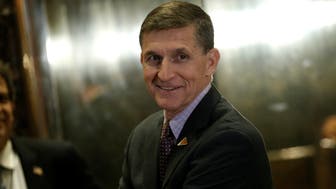

CNN |
Breaking down Flynn’s lies about his Russia calls
CNN The sanctions targeted Russia’s intelligence services and Russian agencies that were involved in cyberactivities. Flynn and Kislyak had phone conversations on December 29, 2016, the day that Obama announced the new sanctions and also expelled 35 … Here’s what Mike Flynn lied to the FBI aboutVICE News Mike Flynn, Trump and Mar-a-Lago: A timeline on path to guilty pleaPalm Beach Post Michael Flynn Pleads Guilty to Lying to FBI About Russia, Appears to Be Cooperating With MuellerSlate Magazine (blog) theday.com –Daily Beast all 2,307 news articles » |
At forty years old, Cotton is the youngest member of the Senate, and he retains the erect posture and solemn bearing that he displayed as a member of the Army’s Old Guard, which presides at military ceremonies, including funerals, in Washington. He’s let his hair grow, a little, since his Army days. When he first ran for office, in 2012—he served a single term in the House of Representatives before winning his Senate seat, in 2014—Cotton was often described as robotic on the stump, but he’s improved somewhat as a speaker, even if he still projects more intelligence than warmth. In this manner, he gave an assignment to the two hundred or so guests in the hotel ballroom.
“Go home tonight and turn on one of the nighttime comedy shows. Tomorrow morning, turn on one of the cable morning-news shows. This Saturday, watch ‘Saturday Night Live,’ ” he said. “All the high wardens of popular culture in this country, they love to make fun of Donald Trump, to mock him, to ridicule him. They make fun of his hair, they make fun of the color of his skin, they make fun of the way he talks—he’s from Queens, not from Manhattan. They make fun of that long tie he wears, they make fun of his taste for McDonald’s.” He went on, “What I don’t think they realize is that out here in Arkansas and the heartland and the places that made a difference in that election, like Michigan and Wisconsin, when we hear that kind of ridicule, we hear them making fun of the way we look, and the way we talk, and the way we think.”
It was, on one level, a breathtaking leap—to equate mockery of a louche New York billionaire with attacks on the citizens of this small, conservative city, which lies across the Arkansas River from Oklahoma. But Cotton’s appeal to his audience for solidarity with Trump, which was greeted with strong applause, represented just one part of his enthusiastic embrace of the President. Stephen Bannon, Trump’s former top strategist and the chairman of the right-wing Web site Breitbart News, told me, “Next to Trump, he’s the elected official who gets it the most—the economic nationalism. Cotton was the one most supportive of us, up front and behind the scenes, from the beginning. He understands that the Washington élite—this permanent political class of both parties, between the K Street consultants and politicians—needs to be shattered.” At the same time, Cotton has maintained strong ties with the establishment wing of the G.O.P. Karl Rove, President George W. Bush’s chief political adviser, told me, “Cotton is not like a Steve Bannon, who wants to blow up the existing structure, uproot the ideology of the Republican Party and replace it with something new. He’s a rising star. He’s capable of building bridges within the Party. He wants to get things done.”
In recent weeks, several Republican Senators have denounced Trump for his intemperance and his dishonesty. Jeff Flake, of Arizona, and Bob Corker, of Tennessee, condemned Trump and announced that they would not seek reëlection in 2018. Ben Sasse, of Nebraska, whose term is not up until 2020, said that, by threatening journalists, Trump was violating his oath to defend the Constitution. Cotton has made a different bet, offering only the gentlest of criticisms of the President. When, in the course of several weeks of conversations, I asked Cotton about one or another of Trump’s controversial statements or tweets, he always responded in the same manner. “The President puts things sometimes in a way that I would not,” he said in early October. “But he was still nominated by our voters and elected by the American people to be our President, and if we want him to accomplish our agenda we need to set him up for success.”
Even Trump’s latest political traumas have not shaken Cotton’s faith in him. Following the indictment of Trump’s former campaign manager Paul Manafort and former campaign adviser Rick Gates, last week, Cotton urged a prompt resolution of the investigation into the Trump campaign, but he did not call for the removal of Robert Mueller, the special counsel. “What’s in the best interest of everyone is for these inquiries to move forward, and to follow them to their proper conclusion as quickly as possible,” Cotton said.
Roby Brock, who hosts the leading public-affairs television program in Arkansas, told me, “From the beginning, Tom could play to both the establishment and the Tea Party. Everyone recognizes he’s got a firm set of conservative principles, but that makes him a polarizing figure. There are a lot of people here, too, who hate him and think he’s the Antichrist. The only thing everyone agrees on is that he wants to be President someday.” To make that next leap, Cotton expresses the militarism, bellicosity, intolerance, and xenophobia of Donald Trump, but without the childish tweets. For those who see Trump’s Presidency as an aberration, or as a singular phenomenon, Cotton offers a useful corrective. He and his supporters see Trump and Trumpism as the future of the Republican Party.
In September, President Trump repealed the Obama-era executive order known as DACA, which protected the so-called Dreamers from deportation, but he said that he also wanted Congress to pass a law that would allow them to remain in the United States, even making a preliminary deal with Chuck Schumer and Nancy Pelosi, the Democratic congressional leaders. But, after Cotton spoke out against a quick deal to protect the Dreamers, Trump made a formal proposal to Congress that attached many strings Cotton had demanded. “I had dinner with the President and General Kelly on October 2nd, and we talked about DACA,” Cotton told me. “They said that Chuck and Nancy had done some post-dinner spin, to go along with the post-dinner dessert, about what the President actually agreed to on DACA. I think the fix that the President announced is a better step in the right direction.”
The following month, Trump gave Cotton a victory on the touchstone issue of his Senate career by decertifying Iran’s compliance with the nuclear-arms deal that the Obama Administration had negotiated. “I told the President in July that he shouldn’t certify that Iran was complying with the agreement,” Cotton told me. “Putting aside the issue of technical compliance or noncompliance, it’s clear that the agreement is not in our national interest.” Following Trump’s action, Cotton joined forces with Senator Corker, the chairman of the Foreign Relations Committee, on a proposal that, if passed, would likely lead to the termination of the Iran nuclear deal and the reimposition of American sanctions.
“Let there be no doubt about this point,” Cotton said, in a recent speech to the Council on Foreign Relations. “If we are forced to take action, the United States has the ability to totally destroy Iran’s nuclear infrastructure. And, if they choose to rebuild it, we could destroy it again, until they get the picture. Nor should we hesitate if compelled to take military action.” In describing his preferred approach to negotiations with Iran, Cotton said, “One thing I learned in the Army is that when your opponent is on his knees you drive him to the ground and choke him out.” In response, a questioner pointed out that killing a prisoner of war is not “American practice.” (It is, in fact, a war crime.)
Similarly, in North Korea, Cotton supports Trump’s brinkmanship with Kim Jong Un, and excoriates China for its failure to rein in its ally. “Time and time again, Beijing shows that it is not up to being the great power it aspires to be,” Cotton said. (His hostility toward China endears him to the Bannon wing of the Republican Party, which views the U.S.-China relationship as the defining conflict of the modern world.)
Cotton has emerged as such a close ally of the Trump White House that one recent report suggested that the President would name him director of the C.I.A. if Mike Pompeo, the current director, were to replace Rex Tillerson as Secretary of State. (Trump is widely believed to be dissatisfied with Tillerson.) In a conversation in mid-October, Cotton did not dismiss the possibility of taking the C.I.A. job. “I am pleased to be a senator,” he told me. “But, of course, I will always take a call from the President, and he has called me many times.” As a member of Trump’s Administration, Cotton would ratify the President’s instincts. He offers Trump a certainty that matches his own, especially about the threats the nation faces and the best ways to address them.
The Cottons have been in Arkansas for six generations, and Tom’s parents make their living running what’s known as a cow-calf operation, on several plots of land in the Arkansas River Valley. In the specialized world of beef-and-dairy production, the Cottons’ business is the first stage—the production of the cows, which are sold to ranchers. The Cottons have always done some farming, but when Tom was a boy his mother was a public-school teacher and a middle-school principal, and his father worked for state government, doing inspections for the Department of Health. Like most people in Arkansas at the time, Tom’s parents were Democrats. But the leitmotif of Tom Cotton’s political career has been the decline of the Democratic Party among white voters in Arkansas. “The Democratic Party has drifted away from them,” Tom told me, as his parents sat nearby. “Bill Clinton would be repudiated by his own party today. Hillary Clinton repudiated a lot of her husband’s chief accomplishments when he was in office. So that’s a real fundamental story about politics in Arkansas and politics across the heartland.”
Tom had an idyllic boyhood in the town of Dardanelle, centered on sports and school, where he excelled, and he won admission to Harvard. When he arrived in Cambridge, in the fall of 1995, he still had braces on his teeth, though he had grown to a full six feet five; friends remember him as a bit of a loner, at least at first. He was also already a conservative, if not a Republican, as he was not afraid to let his new neighbors know.
Cotton began writing an opinion column for the Crimson, the campus daily, where he made a name for himself as an outspoken dissenter on a liberal campus. Shortly before he graduated, in 1998, Thomas B. Cotton wrote a farewell to his readers. “I never sought to be loved or to be treated justly,” he said. “How could I? I wrote against sacred cows, such as the cult of diversity, affirmative action, conspicuous compassion and radical participatory democracy. I wrote in favor of taboo notions, such as Promise Keepers, student apathy, honor and (most unforgivably) conservativism.” After college, Cotton went to Harvard Law School. He worked in law firms during the summers and landed a clerkship with a federal appeals-court judge.
He appeared headed for a life of prosperous anonymity in law, but the attacks of September 11, 2001, upended his plans. “I was going to play intramural basketball, enjoy my last year in school, and then, in the second week of school, the attacks happened, and that changed my orientation,” he told me. “I spent a lot more time from that point forward thinking about the threat we faced, reading about history, reading military history, started thinking about joining the Army.”
Cotton approached the matter with the careful deliberation that has characterized his career. He decided to take the clerkship he had already accepted, with Judge Jerry Smith, on the Fifth Circuit, then work at Gibson, Dunn & Crutcher, in Washington, to start paying off his student loans. “I thought he had a great future at the firm,” Bill Kilberg, the partner who supervised Cotton’s work, told me. “Then, one day in 2004, Tom came and said he was thinking about leaving the firm to join the Army. I said, ‘Tom, the Army has plenty of lawyers, they really don’t need you, and it’s not necessary for you to join the Army to serve.’ He said, ‘Oh, no, I’m not going to be a lawyer. I’m going to be an Airborne Ranger.’ And I looked at him and said, ‘Tom, have you talked to your mother about this?’ ”
When I asked Cotton about the decision, he said, “The Army needs lawyers, but that’s not the heart of the Army’s mission. The Army’s mission is the infantry’s mission.” He went on, “So I wanted to do that mission, wanted to do the heart of it. I wanted to lead troops in combat.”
Cotton served with the 101st Airborne Division in Iraq. He led ninety-six-hour patrols in the field, followed by thirty-six-hour stretches at a base near Baghdad. The base had Internet access, and one day in the summer of 2006 Cotton saw that the Times had disclosed, over objections from the Bush Administration, the existence of certain terrorist-surveillance programs. Cotton fired off a letter to the editor, copying several conservative Web sites, and then left on a patrol, where he was cut off from all electronic contact with the United States. “Congratulations on disclosing our government’s highly classified anti-terrorist-financing program,” the letter begins. “I apologize for not writing sooner. But I am a lieutenant in the United States Army and I spent the last four days patrolling one of the more dangerous areas in Iraq.”
The letter combined outrage, overstatement, and savvy politics in a manner that Trump would perfect a decade later. “You may think you have done a public service, but you have gravely endangered the lives of my soldiers and all other soldiers and innocent Iraqis here,” Cotton wrote. “Next time I hear that familiar explosion—or next time I feel it—I will wonder whether we could have stopped that bomb had you not instructed terrorists how to evade our financial surveillance.” He continued, “And, by the way, having graduated from Harvard Law and practiced with a federal appellate judge and two Washington law firms before becoming an infantry officer, I am well-versed in the espionage laws relevant to this story and others—laws you have plainly violated. I hope that my colleagues at the Department of Justice match the courage of my soldiers here and prosecute you and your newspaper to the fullest extent of the law. By the time we return home, maybe you will be in your rightful place: not at the Pulitzer announcements, but behind bars.” When Cotton returned to the base, he learned that the Times hadn’t run the letter but the Web sites had, and the chief of staff of the Army had distributed it to his subordinates.
“I started hearing about Tom when he was still in the military, when I was state chair of our party,” Dennis Milligan, who is now the Arkansas state treasurer, told me. “As chair, you’re always looking for new talent, and people were talking about him even then. They knew he had given up all that money in the law to serve his country.” From Iraq, Cotton was summoned to serve in the Old Guard. (Cotton hoped he had won appointment to the prestigious unit on merit, but the Army had simply summoned the six tallest lieutenants in Iraq.) Later, he volunteered for a tour in Afghanistan, where he won a Bronze Star, before leaving the service, in 2009. After a brief stint working at McKinsey, Cotton returned to Arkansas to run for Congress in his home district. Mike Ross, a Democrat, had retired, and Cotton, campaigning with a heavy emphasis on his military service, won the open seat with about sixty per cent of the vote.
Pryor, more than anyone, has lived the recent political evolution of his state. His father, David (governor from 1975 to 1979, and senator from 1979 to 1997), along with Dale Bumpers (governor from 1971 to 1975, and senator from 1975 to 1999), and Bill Clinton (governor from 1979 to 1981 and 1983 to 1992), constitute the gifted political triumvirate that kept the Democratic Party alive in Arkansas after it had faded in nearby states. Clinton, of course, parlayed his moderate liberalism into two terms as President. Mark Pryor was elected state attorney general in 1998, and then won his Senate seat in 2002. Six years later, Republicans didn’t even field an opponent against him. But just six years after that, in 2014, Pryor lost in a landslide to the thirty-seven-year-old Tom Cotton.
“For a long time, Arkansas Democratic politics was kept separate from national Democratic politics,” John Brummett, a political columnist at the Democrat-Gazette, the leading newspaper in the state, told me. “That continued in Arkansas through the nineties and into the two-thousands, because of Clinton. White rural conservatives here could look on the national Democratic Party and see the same guy as President that they were happy enough with in Arkansas.” But the trends that were altering the politics of neighboring states were percolating in Arkansas as well. “ ‘God, guns, and gays’—social issues—were driving white conservatives to the Republicans all along,” Brummett said. “It just exploded when Obama became President.” Before the Obama years, Republicans had won the occasional race in Arkansas; Mike Huckabee was first elected governor in the nineties. But in the past decade the state’s six-person congressional delegation and seven statewide elected officials have gone from nearly all Democrats to all Republicans.
Toxic racial politics contributed to this shift. Max Brantley, a longtime local journalist, now with the Arkansas Times, said, “It is impossible not to see race as a central element in the fall of the Democratic Party here.” After the crisis over the integration of Little Rock Central High School, in 1957, racial politics in the state calmed for a time. This was in part because of the relatively small number of African-Americans; they make up roughly fifteen per cent of the population, as opposed to thirty per cent in the Deep South. “Discrimination was not as evident in Arkansas as it was in other Southern states,” Joyce Elliott, a veteran state senator, said. “It took a black President to bring out the threat.” She added, “I would always say to my liberal white friends, ‘Oh, come on, surely it’s gotten better.’ And they’d say to me, ‘Oh, no, it hasn’t. You can’t believe what white people say about Obama in private—he’s Kenyan, he’s Muslim, they’d call him unprintable racial epithets.’ ” Brantley told me, “You needed to be here to see how quickly the politics changed after Obama came in. He is so deeply disliked here. I think a lot of people in Arkansas thought he was ‘uppity,’ to use the old smear.”
Obama’s Presidency certainly coincided with, if it didn’t directly cause, the decimation of the Democratic Party in Arkansas. Republicans thrived by targeting Obama even in contests that had nothing to do with him. Republican candidates for justice of the peace inveighed against Obamacare, which they never referred to as the Affordable Care Act. When Cotton challenged Pryor, in 2014, he put Obama at the center of his campaign. In one television advertisement, featuring a grainy black-and-white video of Obama, Cotton vowed, “We need a senator who will hold the President accountable.” Another showed Obama saying that he wasn’t on the ballot but his policies were. “President Obama is finally right about something,” Cotton said, in response. A third ad ended with the tagline “Mark Pryor—voting with Obama, voting against Arkansans like you.” Cotton also benefitted from enormous outside spending by conservative groups, including some affiliated with the Koch brothers, who have substantial holdings in Arkansas. According to the Center for Responsive Politics, outside groups spent twenty-three million dollars for Cotton, compared with fourteen million for Pryor.
Cotton rejects the notion that race had anything to do with his victory, or with the rise of the Republican Party in Arkansas. “I don’t think that’s all that different from the intense unpopularity of George Bush in 2006 and 2008,” he told me, in a conversation in his Senate office. “The President’s the head of the Party, he takes up most of the attention in American politics, and when he’s very unpopular opponents in the other party tend to run against him, whether they’re running for the United States Senate or whether they’re running for justice of the peace.” Besides, he said, Democrats in Arkansas had a special reason to disdain Obama: “It wasn’t because Barack Obama was black, it was because Barack Obama stopped the Clinton restoration.”
As reviled as President Obama was in Arkansas, the Affordable Care Act has proved successful and popular in the state. About three hundred thousand people, which amounts to more than ten per cent of the state’s population, have taken advantage of the law to obtain health insurance. The state’s governor, Asa Hutchinson, is a conservative Republican, but he’s urged Congress to protect the money that the state receives under the program. He has, however, made a change. The program is not called Obamacare but, rather, Arkansas Works. It apparently took the removal of the President’s name to make the law palatable to Arkansans.
“I remember the first time I met Tommy,” Trey Gowdy, a South Carolina congressman, told me. “We were debating a medical-malpractice bill on the floor of the House, and he comes up and starts talking about the details of the bill. And I said, ‘First of all, who are you?’ He said he was the new congressman from Arkansas. And I said, ‘You can’t be from Arkansas, because you’re wearing shoes.’ And then he starts telling me to read some law-review article about malpractice by Robert Bork or someone. And I said, ‘Dude, the chess club meets around the corner.’ ” (Gowdy later became a close friend of Cotton and his wife, Anna, a lawyer and former prosecutor.)
Shortly after Cotton was elected to the House, the Senate passed a comprehensive immigration-reform bill, which offered a path to citizenship for some undocumented aliens. Cotton was among the leaders of the successful effort to persuade John Boehner, then the Speaker, to block the bill from even coming up for a vote in the House. When we chatted at the kitchen table of his boyhood home, Cotton explained his opposition. “It was the élite, bipartisan consensus—‘It’s the only possible solution’—another idea which the great and the good in Washington love, but wrongheaded in almost every particular,” he said. “If you live in a big city and you work in an office building, immigration is almost an unalloyed good for you. . . . It makes the price of services that you pay for a little bit more affordable—whether it’s your nanny to take care of your kids for you, or landscaping your yard, or pedicures, manicures, that sort of thing. And you get a lot of exciting new fusion restaurants as well.
“But if you live and work in a community where they have a large illegal-immigrant population that’s straining the public school, that’s clogging up the emergency room when you’re trying to get care, that makes it more dangerous to drive in the roads because people don’t have driver’s licenses or they don’t have insurance, or if they are bidding down the wages or even taking jobs away from you, then it doesn’t look nearly so good,” Cotton said. He endorses Trump’s plan to build a wall on the Mexican border—“Walls work,” he often says—and is a lead sponsor of a bill, strongly supported by the White House, that would cut legal immigration roughly in half. (Cotton’s views on immigration are debatable in every particular. It’s far from clear that a border wall with Mexico would “work” to stop illegal immigration in any meaningful way. Most economists believe that immigrants, legal and otherwise, add more to the economy than they take from it, and that their presence in the labor force does not lead to lower wages over all.)
As a legislator, Cotton has shown little deference to his elders. John Cornyn, the senior senator from Texas, told me that new senators used to sit back for a while. “But Tom proved right away that he was very engaged and knowledgeable,” Cornyn said. “He probably knows more about geopolitics than most senators.” In March of his first year in the Senate, Cotton wrote an open letter to the “Leaders of the Islamic Republic of Iran,” which was co-signed by forty-six other Republican senators, warning the mullahs that Congress might undo any agreement they reached with Obama. The letter was denounced by Executive Branch officials as an attempt to interfere in a diplomatic initiative, but Cotton regards it as a triumph. In his recent speech at the Council on Foreign Relations, he boasted about the letter: “Didn’t I warn the ayatollahs that this deal might not survive if it wasn’t a treaty? I think I did.”
When I asked Cotton what he learned during the Iraq War, he replied, “Security comes first.” He continued, “In 2003, there were a lot of grand ambitions of what a postwar Iraq would look like, and all the different things that needed to happen. And we neglected the most basic thing, which is physical security for the people there and for our troops. You see that now in Afghanistan as well. You see it in so many places around the world. You simply cannot neglect security, and without security there cannot be political compromise and reconciliation, there cannot be good governance, there cannot be economic development, there can’t be anything.”
If Rand Paul is the leading Republican isolationist in the Senate, Cotton, in short order, has become heir to the opposing wing of the Party, the one associated with Senator John McCain, whose efforts to increase the defense budget Cotton has championed. “Tom is a veteran of Iraq and Afghanistan. He’s got mud on his boots,” McCain told me. “That means he has special credibility on those issues, just like the World War Two generation did around here for a long time. We need Tom and people like him.” But Cotton has gone well past McCain in his swaggering belligerence. In a February, 2015, hearing of the Armed Services Committee, Cotton announced that he favored keeping open the detention facility at Guantánamo Bay. “In my opinion, the only problem with Guantánamo Bay is there are too many empty beds and cells there right now,” Cotton said. “We should be sending more terrorists there for further interrogation to keep this country safe. As far as I’m concerned, every last one of them can rot in hell, but as long as they don’t do that they can rot in Guantánamo Bay.” (Even McCain favors closing Guantánamo, which he believes stains the reputation of the United States and serves as a recruitment tool for terrorists.)
During the last days of the Obama Administration, Cotton also helped to sabotage a criminal-justice-reform bill, which had a meaningful chance of passage. Senator Cornyn, the second-ranking Republican, was pushing the bill, which would have ended mandatory minimum sentences for some narcotics offenders. Cotton took the public lead in making statements about the proposal which, as with his comments on Guantánamo, skirted the edge of demagoguery. “I don’t think any Republicans want legislation that is going to let out violent felons, which this bill would do,” Cotton said. His rhetoric helped turn a difficult political challenge into an impossible one, and the Republican leadership in the Senate never even brought the bill up for a vote. Cotton told me, “I think most Arkansans believe they elected me to help keep dangerous people in prison.” Jeff Sessions, Trump’s Attorney General, shares Cotton’s disdain for criminal-justice reform, and the move toward shorter sentences at the federal level has halted.
For some Democrats, however, Cotton made his name in the Senate in a more personally poisonous way. In his first year, Cotton placed a hold on Obama’s nominations for the Ambassadors to Sweden, Norway, and the Bahamas, because of an unrelated dispute regarding the Secret Service. As months passed, Cotton released the holds on the Sweden and Norway envoys—because, he said, those countries were NATO allies—but he prevented a vote on Cassandra Butts, an old friend of the President’s, as the Ambassador to the Bahamas. Butts had been waiting for a Senate vote for eight hundred and thirty-five days when, in May, 2016, she died suddenly, of an undiagnosed cancer. Cotton said, “I feel very badly about her death and the timing of it. I wish the White House had just addressed this much earlier.” Still, Cotton’s actions left a bitter aftertaste for some of his colleagues. “I thought what he did was outrageous,” Richard Durbin, an Illinois Democrat and the assistant minority leader, said. “There is a point where winning a political battle isn’t worth it.”
Cotton has carved out a clear Trumpism-without-Trump agenda: limits on immigration throughlegislation, deportations, and a wall; longer prison sentences for American convicts and suspected terrorists abroad; a bigger budget for the Department of Defense. The question is whether he has the charisma to sell that agenda to a broader public. Recently, at his Little Rock office, Cotton presented several medals to the family of George Anderson, a Second World War veteran who had died in 2006. Cotton began with a solemn introduction, but then, unexpectedly, Anderson’s family members, most of whom were elderly, took over the proceedings and began telling stories about George, who had made his living running car washes and coin-operated laundries. Cotton’s staff members and the assembled local reporters began chuckling at the rambling accounts of how George stacked his coins. A more deft politician might have joined in the fun, but Cotton just stood there, seemingly paralyzed by the deviations from good order. The ceremony came to a close when George Anderson’s surviving sister turned to Cotton and said, “As for you—you keep standing up for our President.” ♦
An earlier version of this article included an erroneous anecdote about a dorm-room discussion during Cotton’s freshman year.