Read more at: http://www.nationalreview.com/corner/453485/nyt-shows-how-not-analyze-mass-shooting-data
–
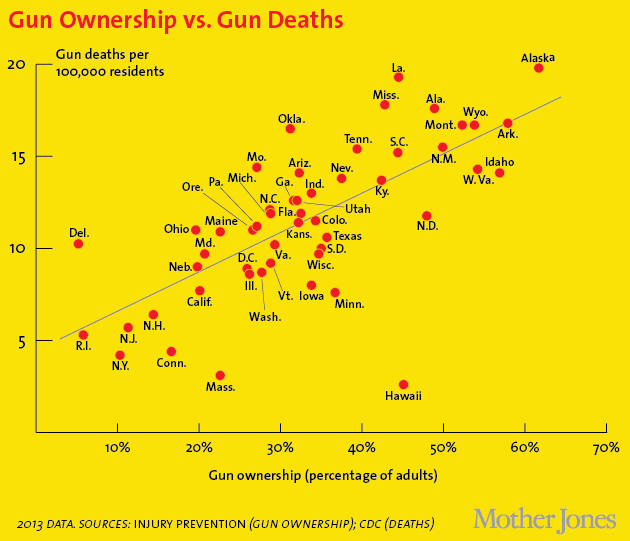
“We shouldn’t care about “gun murders” or “mass shootings”; we should care about murders in general and mass killings in general, regardless of how they’re accomplished. (Up to a point it’s essentially tautological to claim that more guns translates to more problems with guns, because a society with no guns by definition cannot have any problems with them.) As I’ve noted numerous times before, there is no simple, consistent correlation between gun ownership and murder or homicide rates in general, either among developed countries or among U.S. states. More sophisticated studies face a variety of serious methodological obstacles — I don’t find any of them that compelling — and have reached varying conclusions. The research on mass shootings in particular is in an even more primitive state.”
Read more at: http://www.nationalreview.com/corner/453485/nyt-shows-how-not-analyze-mass-shooting-data
4:28 PM 11/7/2017 – The Root Causes of Mass Shootings in the U.S., in my opinion – M.N. | NYT Shows How Not to Analyze Mass-Shooting Data – National Review | The Web World Times – News and Opinions Review


4:28 PM 11/7/2017 – The Root Causes of Mass Shootings in the U.S.: In my opinion:
If you admit as the hypothetical explanatory option the hostile special intelligence operation nature of the mass killings, and it is impossible not to consider this scenario as an, if not the (in majority of cases) explanation, then all the sociological and the statistical studies become irrelevant, just as the gun ownership explanatory theory, which is indeed false, in my opinion. This latter factor might be contributing but not the root cause, and not the main causal factor in the modern-day U.S. culture.
Michael Novakhov
11.7.17
P.S.: But the good thing is that we started to ask these questions and started to look for the answers. We should not let the conceptual stereotypes to cloud our judgment. One of such stereotypes, regarding “Al Qaeda”, started to crumble before our eyes: “21 Years of War with Al Qaeda?” “ISIS”, probably is next.
It looks like the beginning of the end of the historical denial. So much for the powers of the very plausible self-deception: “I do not see it, because I do not want to see it”, just like the good old three monkeys.
Links:
-
Root causes of Mass Shootings in the U.S.
-
NYT Shows How Not to Analyze Mass-Shooting Data – National Review
________________________________


Current News, Selected Articles, Reviews, Analysis, Investigations, Opinions

National Review |
NYT Shows How Not to Analyze Mass-Shooting Data
National Review Some colleagues sent me the New York Times article “What Explains U.S. Mass Shootings? International Comparisons Suggest an Answer” today. My jaw just about hit the floor when I saw the chart that appears at the top of the piece, above everything else … Where the guns used in Chicago actually came fromWashington Postall 58 news articles » |

Los Angeles Times |
A mass shooter’s name is part of the story; concealing it is silly and self-important
Los Angeles Times As anyone who has taken a high school journalism class knows, one of the 5 Ws that reporters should be careful to include in the first paragraph of a news story is “who.” Usually that means providing the name of the newsmaker, whether his actions are … |

The good news is that communities have proven resilient when attacked. The bad news is that this week—with calls for “extreme vetting” and denigration of our criminal justice system as a tool against terror—we saw dangerous backsliding instead of a renewed focus on the work needed for the next phase in the war on terror.
How should we respond to this latest terror act on our soil? Rather than demagoguing on immigration, launching divisive political attacks, or disparaging our criminal justice system, we should focus on what works. Effectiveness should be our lodestar. Russia is not the only one who wants to weaken the United States by sowing division in our country—the terrorists want to do so as well. We shouldn’t let them.
When tragedy and terror strike we must deliver swift and certain justice consistent with the rule of law. While it appears cooler heads have prevailed to reverse the President’s initial impulse to send the New York attacker to Guantanamo (an unprecedented and legally dubious move), the fact that we found ourselves having the debate yet again about “war” vs. “law enforcement” in the terror fight prompted disturbing déjà vu. Dedicated professionals across two administrations worked hard to ensure that this country can apply all tools—military, intelligence, law enforcement, diplomacy, financial sanctions—to disrupt threats and hold terrorists accountable. For terrorists caught on U.S. soil, we have relied on a criminal justice system that is the envy of the world not only because it is the hallmark of our rule of law society but also because it gets results.
The record is clear when it comes to generating intelligence, securing convictions and safely holding terrorists. The more than one million federal, state, and local law enforcement officers who work in that system put their lives on the line to keep us safe are anything but a “laughing stock.” To the contrary, they include more than 30,000 FBI agents, intelligence analysts and other professionals who I was proud to call colleagues when I served as Chief of Staff to then FBI-Director Robert S. Mueller. This nation is also served everyday by dedicated federal prosecutors who are no “joke.” That includes those in the Southern District of New York who, true to their tradition of independence, tuned out the political talk and moved swiftly to charge the New York attacker. It was precisely the need for intelligence-driven criminal prosecutions of terrorists and spies that led to the creation of the Justice Department’s National Security Division which I was privileged to lead during the Obama Administration. These elements of our post 9/11 architecture—solidified over both Republican and Democratic Administrations—have brought justice in hundreds of terrorist-related cases since 9/11.
Contrast that approach with the (hopefully short-lived) impulse to send Saipov to Guantanamo on the theory that we’re at war (we are) and he’s an enemy (he is) and enemies don’t get lawyers (not quite). The Supreme Court has determined that Guantanamo Bay, where a detainee has the right to challenge his detention, is not lawyer-free zone. And while a bipartisan effort reformed military commissions in 2009 to maintain a prosecution tool for terrorists caught on a hot battlefield, they have proven anything but swift and certain. In 15 years, the military commissions have delivered just eight convictions or guilty pleas and several of those have been overturned or invalidated. The 9/11 and U.S.S. Cole bombing victims and their families are still waiting for justice today.
Justice would not be served by sending Saipov to Guantanamo. Nor would it serve the goal of generating intelligence and understanding how Saipov came to plow down pedestrians on Halloween afternoon. Saipov reportedly has talked to FBI agents and told them that he consumed ISIS propaganda prior to his attack. Understanding more about how and when he became radicalized is critical to stopping future attacks. But the surest way to keep that from happening would be to interrupt the FBI interrogation and ship Saipov to Guantanamo.
It is dangerous pre-9/11 thinking to suggest that the FBI can’t act in this case—as it has in so many others since 9/11—to obtain intelligence from a terrorist in custody. In fact, the FBI can immediately question terrorists—without giving Miranda warnings—to identify other threats and plots. In 2011 when Congress was considering a mandatory military custody law for terrorist captures here or abroad, the FBI was right to argue that such a mandate would interrupt their intelligence gathering process by turning a terrorist over to the military where he could challenge his military detention with the benefit of a lawyer. Sure enough, in case after case where the FBI has moved quickly to gather intelligence and then bring a prosecution in our courts, terrorists have pled guilty or received lengthy sentences in the highest security Federal prisons. And importantly the FBI has been able to generate intelligence that led to the capture of other terrorists (Just ask Christmas Day bomber Umar Farouk Abdulmutallab). We need this intelligence now more than ever in order to understand how Saipov was radicalized and how someone might have intervened in time to stop him.
It appears that Saipov did not slip through the vetting system, but instead may fall into the more-common category that DHS described in March of this year when it concluded that most foreign born, US-based terrorists are radicalized after they arrive. At the moment, we have a rare opportunity, having taken Saipov into custody alive. As NYPD Deputy Commissioner John Miller said, Saipov followed the ISIS playbook “to a tee” by weaponizing a vehicle and leaving a note to brag about it. This breed of terrorist poses a significant challenge to law enforcement and we should strive to learn as much as we can about Saipov’s path to radicalization.
In response to this challenge, we should reject impulsive responses in favor of what works. Recycling campaign chants of “extreme vetting” and pulling the plug on the Diversity Visa Program which reportedly allowed Saipov entry in 2010 is a distraction; he reportedly was radicalized years after he entered the United States. To be clear, we should support strong and thorough vetting for anyone who wants to enjoy the rights and benefits of this country. Such vetting, regardless of specific program, should be refined based on threat intelligence. This is why following the Paris attacks in 2015, the DHS strengthened the visa waiver program to respond to the threat from foreign fighter returnees who may have traveled to join ISIS in Syria and Iraq but held European passports eligible for visa-free travel to the United States. The future of the Diversity Visa Program might be a reasonable topic for debate, but based on what we know now is in no way related to the tragedy on the Westside Highway.
Rather than creating distractions and issuing blanket travel bans, our vetting process should respond to the actual threats we face. We should be building trust in communities we need to identify future threats, not alienating and marginalizing them. Let’s focus on working with social media companies to stop abuse of their platforms. Let’s work to strengthen relationships with our international security partners.
Sixteen years after 9/11 we face a different type of threat. In response, we should emulate the best we’ve seen from this country. We should model resilience and support, and we should reject politics in favor of pragmatism. We must summon the best in our communities, in our government and politics, and rely on that which makes us different from every other country in the world: the rule of law and our justice system. Anything less allows terrorists to divide us.


Has the United States been at war with al-Qaeda for 21 years? During the most recent 9/11 military commission hearing at Guantanamo Bay, the prosecution finally articulated its view of when the U.S. and al-Qaeda entered into an armed conflict. According to the prosecution, that putative armed conflict began more than 21 years ago, on August 23, 1996, the day Osama bin Laden, the founder of the terrorist group, published a fatwa calling for attacks on Americans. The government characterized this fatwa as a declaration of war:
We do believe that the ’96 document written by [Osama] bin Laden, who was the head of al-Qaeda at the time he wrote it, is a declaration of war.
The prosecution apparently staked out this astonishing position, at odds with history, law, and the U.S. government’s interests outside of the 9/11 military commission, to satisfy its short-term litigation goal of preserving the military commission’s personal jurisdiction over the 9/11 defendants.
The Military Commission Act grants military commissions personal jurisdiction over “alien unprivileged belligerents.” The Act defines those as individuals who are not U.S. citizens, who are not privileged belligerents, and who either (1) engaged in hostilities against the United States or its coalition partners; (2) purposefully and materially supported hostilities against the United States or its coalition partners; or (3) were a part of al-Qaeda at the time of the alleged offense. All three categories of individual over whom a military commission may have personal jurisdiction must have some connection to hostilities—which the MCA defines as “any conflict subject to the laws of war.” (The timing element of the third category implicates hostilities through §950p(c), which limits offenses triable by military commission to those “committed in the context of or associated with hostilities.”) Hostilities, in turn, are defined as any conflict subject to the laws of war. Thus, the military commission has personal jurisdiction over the 9/11 defendants only if they were connected to an armed conflict between the U.S. and al-Qaeda prior to September 11, 2001.
Since May 2017, the 9/11 military commission is working its way towards a pre-trial, evidentiary hearing on personal jurisdiction. It was in the context of a preliminary hearing addressing what if any witnesses should provide testimony as to personal jurisdiction that Judge Pohl pressed the prosecution for a specific date on which the armed conflict with al-Qaeda began. The government’s response—August 23, 1996—was intended to ensure that the 9/11 military commission could proceed. Unfortunately, that position carries with it significant ramifications implicating state sovereignty—the oldest rule in international law—and fundamental applications and consequences of the law of armed conflict.
It is axiomatic that only states may bring about the legal state of war or, in modern terms, armed conflict, through an act of speech. Historically, the law of war applied to situations of declared war between states. When the 1949 Geneva Conventions established the modern framework for armed conflict that rests primarily on objective indicators of conflict rather than political declarations or determinations, the drafters retained the notion of declared war between states—but only for conflicts between states. Thus, international armed conflicts—armed conflicts between two or more states—may arise upon a declaration of war alone or through the use of armed force between two states. In contrast, non-international armed conflicts——armed conflicts between states and non-state actors (or among non-state actors)—only exist when non-state actors are sufficiently organized and violence between the parties is sufficiently intense. Whereas Common Article 2, which invokes the full panoply of the Geneva Conventions, applies only to interstate war and may be triggered merely by a declaration of war, Common Article 3 applies alone in the event of “an armed conflict not of an international character.” The drafters of the Geneva Conventions simply made no provision for a non-international armed conflict to be triggered by means of a declaration of war.
In fact, the drafters of the Geneva Conventions intentionally excluded a declared-war trigger for non-international armed conflict. Common Article 3 reflects a careful balance: recognizing that conflicts between states and non-state actors may rise to a level of violence comparable to that of interstate armed conflict, while also accommodating states’ desire to minimize international legal regulation intruding on their internal affairs. This bargain reflects states’ aversion to conferring the sort of legitimacy or legal status on non-state actors that could challenge states’ sovereignty, including by implicitly recognizing their belligerent or insurgent status.
Thus, the final clause of Common Article 3 includes a disclaimer: “The application of the preceding provisions [Common Article 3] shall not affect the legal status of the Parties to the conflict.” Jean Pictet’s authoritative Commentary on the Geneva Conventions specifically attributes the provision’s origin to a desire to “prevent the [non-state] party from basing a claim for recognition as a regular Government on the respect it had shown for the Convention,” as required in the original Convention draft. His explanation of Common Article 3 attributes much of its evolution from its initial proposal to its final form to states’ concerns about legitimizing criminal entities.
“There was also a risk of common or ordinary criminals being encouraged to give themselves a semblance of organization as a pretext for claiming the benefit of the Conventions, representing their crimes as ‘acts of war’ in order to escape punishment for them. A party of rebels, however small, would be entitled under the Conventions to ask for the assistance and intervention of a Protecting Power. Moreover, it was asked, would not the de jure Government be compelled to release the captured rebels as soon as the troubles were over, since the application of the Convention would place them on the same footing as prisoners of war?”
Pictet concluded that without the disclaimer, Common Article 3 would not have been adopted. “It meets the fear—always the same one—that the application of the Convention, even to a very limited extent . . . may confer belligerent status, and consequently increased authority, upon the adverse party.”
The same concerns over extending legitimacy to non-state actors persists today. Indeed, the United States has never ratified Additional Protocol I precisely because it had the potential to “give recognition and protection to terrorist groups” by extending the law pertaining to international armed conflicts to certain non-international armed conflicts. In transmitting his decision not to seek ratification of Additional Protocol I, President Ronald Reagan explained to the U.S. Senate that the application of the full panoply of international humanitarian law to armed non-state actors who do not otherwise comply with the law of armed conflict could legitimate the aims and the practices of terrorist organizations.
Nevertheless, solely in order to extend the military commissions’ jurisdiction over the 9/11 defendants, the government has chosen to legitimize bin Laden and al-Qaeda by placing them on the same legal plane as states, stating last week that:
. . . [O]ur position has always been under international law, when you have international armed conflicts, a declaration of war is sufficient alone [to trigger the law of armed conflict].
. . . .
If we were to declare war on another country today, the law of war would apply from the second we declared war. And that’s really what we are talking about. We are talking about when did the hostilities begin so we know when the law of war took over. And clearly our position has always been that we believe it began in 1996 with [Osama] bin Laden’s declaration . . . .
The military commission prosecution evidently believes that, as a matter of law, an individual or a non-state actor may, through its speech alone, unilaterally bring about a legal state of armed conflict. If the military commission were to credit the prosecution’s position, it would preserve the military commission’s jurisdiction and save the prosecution the trouble and difficulty of demonstrating the existence of a non-international armed conflict prior to 9/11. Unfortunately, the consequences of that inexplicable position are not limited to whether the 9/11 military commission may go forward.
According bin Laden’s 1996 fatwa the legal effect of a declaration of war implies that in 1996 al-Qaeda had the characteristics of a state actor. International law normally limits statehood only to those entities that are able to exert effective control over a definite territory and population, engage in international relations, and garner recognition. But none of this was true of al-Qaeda in 1996. Three months before issuing his fatwa, bin Laden and al-Qaeda were evicted from Sudan and dispossessed of their enterprises there. At the time, al-Qaeda boasted as few as several dozen members. And, seven months later, the Taliban—who by then exerted actual effective control over the territory where bin Laden resided—forced bin Laden to relocate to Kandahar from Nangarhar, where he originally established himself in Afghanistan after fleeing Sudan.
The prosecution’s position imbuing al-Qaeda with state-like powers undermine U.S. interests outside of this military commission in at least five ways. First, it undermines the lawfulness and legitimacy of the U.S. war of self-defense against Afghanistan in the aftermath of 9/11. If al-Qaeda were a state or something akin to a state in 1996, then by implication Afghanistan and the Taliban did not so much host al-Qaeda as surround it, as if it were an enclaved state. Under the prosecution’s view, therefore, the Taliban could not be responsible for surrendering bin Laden following the 9/11 attacks, and the United States’ ultimatum to hand him over would have been unreasonable: how could a de facto government with only partial control of its own territory be responsible for curtailing the actions of an enclaved sovereign? Consequently, if the prosecution were right that al-Qaeda was the equivalent of a state actor, the invasion of Afghanistan could be viewed as a misdirected and illegal aggressive war.
Second, the prosecution’s position necessarily suggests that the armed conflict between al-Qaeda and the United States is an international armed conflict—as opposed to a non-international armed conflict—invoking the full panoply of the laws of war. This position also means that al-Qaeda members were the regular armed forces of a state, meaning that members of al-Qaeda could make a colorable claim to combatant immunity and prisoner-of-war (POW) status. At the very least, all of those currently detained and accused of prior membership in al-Qaeda should have been treated as POWs until they received an Article 5 hearing. (Ammar al Baluchi, for example, has requested, but never received, an Article 5 hearing.) The prosecution’s position in the 9/11 case legitimizes attacks by members of al-Qaeda on U.S. soldiers and military infrastructure, narrowing the scope of criminality associated with al-Qaeda attacks. For example, according to the prosecution’s view, the attack on the U.S.S. Cole would remain perfidious but the sailors killed and the vessel targeted would be lawful military targets—and the charge of terrorism would be a mere restatement of the object of war: violence intended to coerce a political result.
Third, if the prosecution position prevailed, al-Qaeda would have enjoyed belligerent rights and the benefit of the laws of neutrality. Neutrality of non-belligerents is automatically triggered by the existence of a state of war between belligerents. Neutrals must remain neutral—that is they must not assist one belligerent party against the other. But belligerents must also refrain from conducting hostilities on the territory of neutral states, a fundamental protection for neutrals and against the spread of war. For example, the application of neutrality as a result of the prosecution’s position would mean that the U.S. violated Sudan’s neutrality along with its sovereignty by bombing the al-Shifa pharmaceutical facility in Khartoum in 1998.
Moreover, and outside of the immediate concerns relating to al-Qaeda, the government’s position suggests that declarations of war by non-state actors are a fast-track to sovereignty. The consequences of this implication may be far reaching. There are numerous entities that have substantially stronger claims to statehood than did al-Qaeda in 1996, but that remain outsiders in the international system. Would entities like Somaliland, the Turkish Republic of Northern Cyprus, Abkhazia, and others finally gain admittance to the international system by declaring war on a neighbor or a far-off foe unlikely to take notice?
Finally, the government’s position leaves unsettled how to differentiate non-state declarations of war that have legal effect from those that do not. The U.S. has been the target of numerous supposed declarations of war by violent non-state actors to which it accorded no legal effect. For example, the United States treated neither the Symbionese National Liberation Army nor the Weathermen as enemy belligerents. Similarly, why give bin Laden’s August 1996 fatwa the legal weight of a declaration of war but not al Qaeda’s earlier 1992 fatwa that likewise called for attacks on U.S. forces in Saudi Arabia?
The only conclusion that can be drawn from the prosecution’s astounding position that bin Laden’s fatwa actually caused a legal state of war with the U.S. is that the government is willing to contort the law of armed conflict to suit its short-term litigation goals. Unfortunately, its single-minded and short-sighted effort to patch up the broken 9/11 military commission is simply making wreckage of law and history—and proving the old adage that hard cases make bad law.
The opinions and views expressed are those of the author alone. They do not represent the views of the US Department of Defense or the US Government.
Image: Getty Read on Just Security »

What Doesn’t: Crime, Race or Mental Health
If mental health made the difference, then data would show that Americans have more mental health problems than do people in other countries with fewer mass shootings. But the mental health care spending rate in the United States, the number of mental health professionals per capita and the rate of severe mental disorders are all in line with those of other wealthy countries.
A 2015 study estimated that only 4 percent of American gun deaths could be attributed to mental health issues. And Mr. Lankford, in an email, said countries with high suicide rates tended to have low rates of mass shootings — the opposite of what you would expect if mental health problems correlated with mass shootings.
Whether a population plays more or fewer video games also appears to have no impact. Americans are no more likely to play video games than people in any other developed country.
Racial diversity or other factors associated with social cohesion also show little correlation with gun deaths. Among European countries, there is little association between immigration or other diversity metrics and the rates of gun murders or mass shootings.
A Violent Country
America’s gun homicide rate was 33 per million people in 2009, far exceeding the average among developed countries. In Canada and Britain, it was 5 per million and 0.7 per million, respectively, which also corresponds with differences in gun ownership.
Americans sometimes see this as an expression of deeper problems with crime, a notion ingrained, in part, by a series of films portraying urban gang violence in the early 1990s. But the United States is not actually more prone to crime than other developed countries, according to a landmark 1999 study by Franklin E. Zimring and Gordon Hawkins of the University of California, Berkeley.
Rather, they found, in data that has since been repeatedly confirmed, that American crime is simply more lethal. A New Yorker is just as likely to be robbed as a Londoner, for instance, but the New Yorker is 54 times more likely to be killed in the process.
They concluded that the discrepancy, like so many other anomalies of American violence, came down to guns.
More gun ownership corresponds with more gun murders across virtually every axis: among developed countries, among American states, among American towns and cities and when controlling for crime rates. And gun control legislation tends to reduce gun murders, according to a recent analysis of 130 studies from 10 countries.
This suggests that the guns themselves cause the violence.
Mass Shootings Happen Everywhere
Skeptics of gun control sometimes point to a 2016 study. From 2000 and 2014, it found, the United States death rate by mass shooting was 1.5 per one million people. The rate was 1.7 in Switzerland and 3.4 in Finland, suggesting American mass shootings were not actually so common.
But the same study found that the United States had 133 mass shootings. Finland had only two, which killed 18 people, and Switzerland had one, which killed 14. In short, isolated incidents. So while mass shootings can happen anywhere, they are only a matter of routine in the United States.
As with any crime, the underlying risk is impossible to fully erase. Any individual can snap or become entranced by a violent ideology. What is different is the likelihood that this will lead to mass murder.
In China, about a dozen seemingly random attacks on schoolchildren killed 25 people between 2010 and 2012. Most used knives; none used a gun.
By contrast, in this same window, the United States experienced five of its deadliest mass shootings, which killed 78 people. Scaled by population, the American attacks were 12 times as deadly.
Beyond the Statistics
In 2013, American gun-related deaths included 21,175 suicides, 11,208 homicides and 505 deaths caused by an accidental discharge. That same year in Japan, a country with one-third America’s population, guns were involved in only 13 deaths.
This means an American is about 300 times more likely to die by gun homicide or accident than a Japanese person. America’s gun ownership rate is 150 times as high as Japan’s. That gap between 150 and 300 shows that gun ownership statistics alone do not explain what makes America different.
The United States also has some of the world’s weakest controls over who may buy a gun and what sorts of guns may be owned.
Switzerland has the second-highest gun ownership rate of any developed country, about half that of the United States. Its gun homicide rate in 2004 was 7.7 per million people — unusually high, in keeping with the relationship between gun ownership and murders, but still a fraction of the rate in the United States.
Swiss gun laws are more stringent, setting a higher bar for securing and keeping a license, for selling guns and for the types of guns that can be owned. Such laws reflect more than just tighter restrictions. They imply a different way of thinking about guns, as something that citizens must affirmatively earn the right to own.
The Difference Is Culture
The United States is one of only three countries, along with Mexico and Guatemala, that begin with the opposite assumption: that people have an inherent right to own guns.
The main reason American regulation of gun ownership is so weak may be the fact that the trade-offs are simply given a different weight in the United States than they are anywhere else.
After Britain had a mass shooting in 1987, the country instituted strict gun control laws. So did Australia after a 1996 incident. But the United States has repeatedly faced the same calculus and determined that relatively unregulated gun ownership is worth the cost to society.
That choice, more than any statistic or regulation, is what most sets the United States apart.
“In retrospect Sandy Hook marked the end of the US gun control debate,” Dan Hodges, a British journalist, wrote in a post on Twitter two years ago, referring to the 2012 attack that killed 20 young students at an elementary school in Connecticut. “Once America decided killing children was bearable, it was over.”
Continue reading the main story

The Sad, Lonely Men Behind America’s Mass Shootings
<a href=”http://CatholicPhilly.com” rel=”nofollow”>CatholicPhilly.com</a>–5 hours ago
In-Depth–San Francisco Chronicle–16 hours ago
No, Mr. President, It Is ‘a Guns Situation’
It’s not Muslims, Mexicans or immigrants making the US unsafe – it’s …
Domestic violence is a link among most mass shooters — but …
Thoughts About Mass Murder
Why High-Profile Events Like Mass Shootings Often Don’t Lead To …
<a href=”http://TAPinto.net” rel=”nofollow”>TAPinto.net</a>–Oct 18, 2017

What Explains US Mass Shootings? International Comparisons …
<a href=”http://Chron.com” rel=”nofollow”>Chron.com</a>–18 hours ago
Blog–The Guardian (blog)–Nov 6, 2017

Week after bombshell, George Papadopoulos largely remains a …
Blog–<a href=”http://Aljazeera.com” rel=”nofollow”>Aljazeera.com</a> (blog)–Nov 4, 2017

Prima Donna from Point Piper: Joan Sutherland interview – archive …
Royal Opera House 2017-18 Preview: How Joan Sutherland …
The Washington National Opera Tries Valiantly to Make Alcina An …

Share this story on NewsBlur
Manipulating history for political ends is not unusual — see the Trump administration and the Civil War. But in Russia, invoking history has long been a way of proclaiming political or ideological affiliation. The “Great October Socialist Revolution” was the founding myth of the Soviet Union; Nov. 7 (Oct. 25 on the old Russian calendar), the date of the uprising that brought the Bolsheviks to power, was the national holiday, on which tanks, missiles and high-stepping soldiers swept through Red Square.
The history of the revolution — and of the czarist past, and for that matter of the entire world — was written to fit the myth of Soviet Russia as the vanguard of civilization, and woe to those who tampered with the official version. Unless they were the guardians of the official version, to whom it fell now and again to rewrite and update that history — like when Stalin went abruptly from demigod to footnote.
The end of the Soviet Union in 1990 set history adrift. The collapse of a totalitarian dictatorship that had overthrown an absolute monarchy forced Russians to confront a painful task of choosing what to glorify, what to condemn, and what to gloss over. Impassioned debates over what role of “liberalism,” “democracy” or “elections” might have had a century ago are really about today.
Those who pine for a powerful state, President Vladimir Putin among them, have come to blame Lenin for the territorial costs he incurred for quitting the war with Germany and to credit Stalin with putting it together again (until it was dismantled anew by Mikhail Gorbachev and Boris Yeltsin). The last czar, Nicholas II, is alternately seen as a weak master who either foolishly allowed the autocracy to founder or who failed to ride with a democratizing tide. The Russian Orthodox Church has canonized him as martyr of an idealized, God-fearing past.
The fall of Communism is the onset of freedom for some, the collapse of empire for others, and simply irrelevant to many Russians under 35, who, according to public opinion polls, simply don’t know much about 1917.
Continue reading the main story


Early Monday, the very first charges were issued in special counsel Robert S. Mueller III’s investigation into possible coordination between the Trump campaign and Russia. Three former Trump campaign officials were indicted in the probe: Trump’s former campaign manager Paul Manafort, and two lesser-known Trump associates Rick Gates and George Papadopoulos. So what are the details […]

President Trump on Thursday appeared to rule out sending the New York terrorism suspect to the U.S. military prison at Guantanamo Bay, Cuba, after threatening a day earlier to send the alleged attacker to the detention center. Backing off his initial statement that he was considering detaining the suspect at America’s most notorious prison, Trump said Thursday […]

On Tuesday afternoon, a 29-year-old Uzbek immigrant, Sayfullo Saipov, allegedly drove a rental truck down a bicycle path in Lower Manhattan. Saipov said he was inspired to carry out the attack by the Islamic State. Eight people — pedestrians and cyclists who were on the path — were killed and at least a dozen were injured […]

TOKYO — President Trump offered a brief overview of his five-country, 12-day trip to Asia as he flew from Honolulu to Tokyo on Saturday, telling reporters that he expects to meet with Russian President Vladimir Putin while abroad, plans to pressure other leaders to take a tougher stance on North Korea, and thinks he is […]

SEOUL — President Trump arrived in South Korea on Tuesday and toured Camp Humphreys, the third military base he has visited since leaving Washington on a 12-day trip to the Asia Pacific as he prepares to deliver a major speech on North Korea. The president landed at the $11 billion base, 40 miles south of […]
From the Military Revolutionary Committee of the Petrograd Soviet of Workers’ and Soldiers’ Deputies
To the citizens of Russia.
The Provisional Government has been overthrown. State power has passed into the hands of the organ of the Petrograd Soviet of Workers’ and Soldiers’ Deputies, the Revolutionary Military Committee, which stands at the head of the Petrograd proletariat and garrison.
The cause for which the people have struggled—the immediate offer of a democratic peace, the abolition of landlord ownership of land, workers’ control over industry, the creation of a soviet government—this cause has been assured!
Long live the revolution of workers, soldiers and peasants!
The Military Revolutionary Committee
of the Petrograd Soviet
of Workers’ and Soldiers’ Deputies
October 25, 1917, at 10:00 a.m.
For those who came in late, this kind of stuff is not new. And the U.S. does it, too. We’ve spent money on everything from propaganda to keep the Communists from coming to power in Italy after World War II to trying to oust Benjamin Netanyahu from the top job in the Israeli government.
Earlier this week, a congressional committee took a deep dive into the alleged Russian interference. The matter of foreign manipulation of the U.S. electorate is one on which Congress should tread carefully. It’s a lot more complex than the Washington politicians and the media stars who travel the Acela between New York and the nation’s capital want you to believe.
The idea was first pushed by people looking for a reason Hillary Clinton lost an election she seemed destined by fate to win. It’s true the Russians put ads on the web. It’s true the Trump campaign met with some Russians and may, as charged, have sought a few of them out to see if they had dirt on Clinton not available through normal channels.
Yet, it’s also true the Democrats were up to much the same thing. The so-called dossier on Trump prepared by Christopher Steele, variously described as a former British intelligence operative, was produced through a private opposition research effort secretly financed by the Democratic National Committee and the Clinton campaign.
That aside, some members of Congress think social media companies are to blame. As the conduits through which information about both Clinton and Trump spread through the electorate, they are supposed to shoulder much of the responsibility for what occurred.
But look at the numbers. Facebook, one of several social media companies called this past week to testify at one point volunteered that ads with content attributable to the Russians in some way went into the newsfeeds of 29 million Americans over a two-year period.
When they finally got all the way downstream they’d been seen, the company estimates, by close to 126 million people, maybe more. That’s at least a third of the country but, over the same period, Americans had more than 30 trillion items flow through their news feed.
Even if you believe every single allegedly Russian spot was read and sent along to at least one other person it constitutes less than one half of one percent of everything people saw. More importantly, no one has shown through any kind of study these ads affected the way people voted.
That’s the key. It’s not a question of whether the Russians were trying to manipulate things; they almost certainly were. The question is whether it worked. In all likelihood it didn’t, though truth is probably unknowable.
Some in Congress don’t care. Needing to look like they’re on the alert and with little consideration of the implication of what they’ve proposed, legislation to regulate Net-based ads and other political communications has already been introduced. These are regulations social media platforms will have to enforce. As blame-shifting goes, that’s like Congress telling computer manufacturers it’s their job to put a stop to hacking and identity theft.
If Congress wants to go any further down this road it should keep the focus where it belongs. Suggesting Facebook, Twitter and other social media companies are somehow complicit in espionage because their platforms were used and abused by techies working for the Russians to spread disinformation misses the point. Facebook is already working on its own to prevent a replay of what happened in 2016. So, one suspects, are the other social media companies.
The government, particularly the U.S. intelligence community should be its willing, helpful partner. Cooperation between the public and private sector will maximize both the efforts and the opportunities to keep disinformation from Russia or anywhere else from spreading while protecting our right to free speech. It’s a win-win. With the government mandates included in the legislative proposals already introduced in Congress, everyone loses.
Roff is a former senior political writer for UPI and a well-known commentator based in Washington, D.C. Email him at peter.Roff@Verizon.net.
Share this story on NewsBlur

BBC News |
The Papers
BBC News Image caption The Guardian is one of several papers to lead on revelations contained in the so-called Paradise Papers, reporting that millions of pounds from the Queen’s private estate have been invested in a Cayman Islands fund. The paper says files … The Paradise Papers: another tax-shelter leak implicates Apple, Trump, Putin, Hollywood, Twitter, Facebook, the …Boing Boing Revealed: Queen’s private estate invested millions of pounds offshoreThe Guardian UK Queen’s Private Estate Invested In Offshore Funds, Says ‘Paradise Papers‘ LeakNDTV CBC.ca all 29 news articles » |
The Week UK |
Dark web: how Russian trolls spread fake news
The Week UK Both were inventions of a Russian “troll farm” assigned to exploit political, racial and religious tensions – and using carefully targeted Facebook ads, Russia’s cyberwarriors orchestrated the ugly clash for the princely sum of $200 (£160). … Some of …and more » |
Russians Posing as Black Activists on Facebook – Google News

Salt Lake Tribune |
Jennifer Rubin: Trump administration is up to its neck in Russians
Salt Lake Tribune Newly leaked documents show that Ross has a stake in a shipping company that does business with a gas producer partly owned by the son-in-law of Russian President Vladimir Putin, according to the International Consortium of Journalists. (AP Photo/J.and more » |
Putin and the Mob – Google News
BuzzFeed News |
Trump Aides On Edge Over The President’s Upcoming Meeting With Putin In Vietnam
BuzzFeed News Trump and his Secretary of State Rex Tillerson both view the meeting as worth the cost of the awkward optics, US officials told BuzzFeed News, but career diplomats inside the administration have come down on different sides. Some White House officials …and more » |
putin won US 2016 election – Google News

Download audio: https://av.voanews.com/clips/VEN/2017/11/06/20171106-190000-VEN119-program_hq.mp3

Donald Trump’s commerce secretary is shown to have a stake in a firm dealing with Russians sanctioned by the US.
The leak, dubbed the Paradise Papers, contains 13.4m documents, mostly from one leading firm in offshore finance.
BBC Panorama is part of nearly 100 media groups investigating the papers.
Please subscribe HERE http://bit.ly/1rbfUog
World In Pictures https://www.youtube.com/playlist?list=PLS3XGZxi7cBX37n4R0UGJN-TLiQOm7ZTP
Big Hitters https://www.youtube.com/playlist?list=PLS3XGZxi7cBUME-LUrFkDwFmiEc3jwMXP
Just Good News https://www.youtube.com/playlist?list=PLS3XGZxi7cBUsYo_P26cjihXLN-k3w246

Special Counsel Robert Mueller is reportedly applying pressure on General Flynn after the indictment of Trump campaign chairman Paul Manafort.
“In…
READ MORE : http://www.euronews.com/2017/11/06/mueller-has-enough-evidence-to-bring-charges-in-flynn-russia-investigation
What are the top stories today? Click to watch: https://www.youtube.com/playlist?list=PLSyY1udCyYqBeDOz400FlseNGNqReKkFd
euronews: the most watched news channel in Europe
Subscribe! http://www.youtube.com/subscription_center?add_user=euronews
euronews is available in 13 languages: https://www.youtube.com/user/euronewsnetwork/channels
In English:
Website: http://www.euronews.com/news
Facebook: https://www.facebook.com/euronews
Twitter: http://twitter.com/euronews
Google+: http://google.com/+euronews
VKontakte: http://vk.com/en.euronews






New York Times |
With Manafort, It Really Is About Russia, Not Ukraine
New York Times Administration officials dismiss the alleged criminal activity by Mr. Manafort, formerly President Trump’s campaign chairman, as being merely about money-laundering and Ukraine — but not Russia, the focus of the investigation by Robert S. Mueller III …and more » |

TIME |
50 Years Ago This Week: In Soviet Russia
TIME Milestone moments do not a year make. Often, it’s the smaller news stories that add up, gradually, to big history. With that in mind, in 2017 TIME History will revisit the entire year of 1967, week by week, as it was reported in the pages of TIME … |

CNN |
Flake: Trump calling for FBI to go after political adversaries is ‘not normal’
CNN “I’ve felt for a long time Congress needs to act with regard to background checks and mental health issues. I’ve introduced legislation on the topic,” he said. “I’ve never felt anybody who is on a no-fly list should be able to get a gun.” Flake also … |

U.S. News & World Report |
Russia Revels in Putin’s Czar Power
U.S. News & World Report … a carefully constructed character. While the latter largely detracts from America’s influence in the world. Both men have a lot of enemies. Yet, only the former KGB officer knows how to really play the bad guy to his advantage. Trump antagonizes … |

|
Russia is a bigger threat than terrorism
Press & Sun-Bulletin While jihadis study Islamic State group videos, Russian-backed propagandists study American political psychology, learning how to best influence voters with their fabrications. They understand the culture of American news … While we are busy fighting … |

InsideSources |
How to Find a Smoking Gun in the Trump-Russia Investigation
InsideSources There are other individuals deep within the Russian intelligence services and Putin’s inner circle who would definitively know the answers to questions of collusion. So how can we find these individuals and a smoking gun, should one exist? The answer …and more » |
John Oliver has discussed Donald Trump’s reaction to the Russia investigation, suggesting that he’s trying to use his incompetence as a defense.
Related: Saturday Night Live: Larry David’s concentration camp gags set sorry tone
Continue reading…

BBC News |
Paradise Papers: Wilbur Ross says ‘nothing improper’ about Russia links
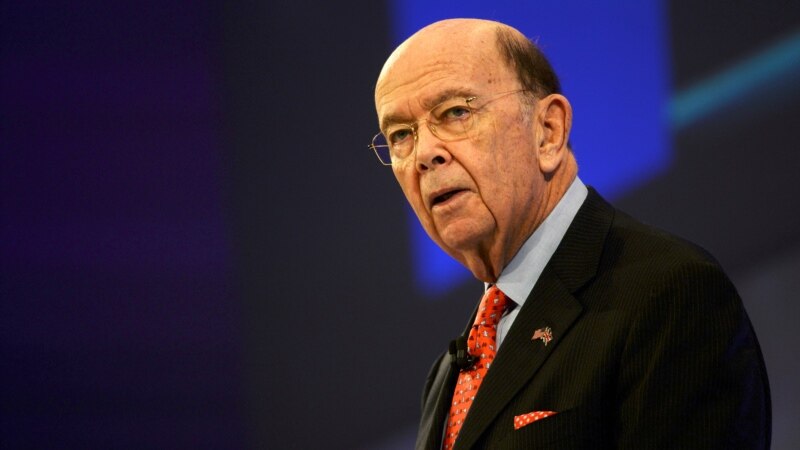
BBC News Donald Trump’s commerce secretary says there is “nothing improper” about his business links toRussian figures who are currently under US sanctions. Wilbur Ross was accused of misleading senators after leaked documents showed his interests in a firm in … ‘Paradise Papers’ reveal Trump commerce secretary Wilbur Ross’ Russia tiesBusiness Insider Massive Leak Reveals New Ties Between Trump Administration and Russia, Implicating Commerce Secretary Wilbur …Daily Beast Paradise Papers: Commerce chief Wilbur Ross’s links with sanctioned RussiansBBC Newsall 97 news articles » |
trump and russia – Google News
Before the start of business, Just Security provides a curated summary of up-to-the-minute developments at home and abroad. Here’s today’s news.
TRUMP ASIA TRIP
“The era of strategic patience is over,” Trump said today at a news conference with Japanese Prime Minister Shinzo Abe on the second day of his Asia trip, referring to the threat posed by North Korea and emphasizing the need to take a hard line against the Pyongyang regime. Kevin Liptak and Jeremy Diamond report at CNN.
Japan could shoot North Korean missiles “out of the sky” with the “massive amount of military equipment” it purchases from the U.S., Trump also said today, Abe reinforced the need for Japan to “qualitatively and quantitatively” enhance its defense capability and that it would intercept missiles “if necessary.” The BBC reports.
Maximum pressure must be exerted on North Korea, Abe said today, agreeing with Trump’s position that all options are on the table to deal with the Pyongyang regime, Reuters reporting.
“No one – no dictator, no regime and no nation – should underestimate, ever, American resolve,” Trump said yesterday in a campaign-style rally with U.S. troops in Japan, also saying before he landed in the country that the Trump administration would consider designating North Korea a state sponsor of terrorism. Julie Hirschfeld Davis reports at the New York Times.
“It’s expected we’ll meet with Putin, yeah,” Trump told reporters at the weekend before landing in Japan, saying that he would seek help from the Russian President on North Korea when they cross paths at multinational conferences in Southeast Asia. Michael C. Bender reports at the Wall Street Journal.
Trump should use his Asia trip to reinforce America’s commitment to the region and serve as a “democratic counterweight to China,” the New York Times editorial board writes.
The Trump administration is slowly shifting toward a more traditional Republican position on China and parts of a more hawkish strategy have been incorporated into speeches that he will give on his Asia trip, but the test of whether the administration will get tougher on China will come once Trump returns. Josh Rogin writes at the Washington Post.
Trump’s trip to South Korea tomorrow could raise “several thorny issues,” Hyung-Jin Kim provides an analysis at the AP.
Trump is the perfect guest for China, his egotistical style, shunning of the normal channels of doing work and ignorance of Chinese history giving Beijing the opportunity to control the situation when he visits this week. James Mann writes at The Daily Beast.
NORTH KOREA
An invasion by ground forces would be the only way to locate and secure all of North Korea’s nuclear weapons sites, the Pentagon told lawmakers in a letter at the weekend, noting that further details about responding to a threat could not be publicly discussed but adding that the Pentagon “assess that North Korea may consider the use of biological weapons.” Dan Lamothe and Carol Morello report at the Washington Post.
The Pentagon assessment demonstrates that a diplomatic solution should be the priority as an outbreak of war “would kill hundreds of thousands of people,” Sen. Dianne Feinstein (D-Calif.) said yesterday. Martin Pengelly reports at the Guardian.
A U.N. report on North Korea’s human rights situation and satellite photos showing the extent of abuse provide another reason why we should not “turn a blind eye” to the Pyongyang regime. The Washington Post editorial board writes.
South Korea imposed unilateral sanctions on 18 North Korean individuals today due to their direct affiliation to North Korean banks, according to an announcement by the South Korean finance minister, Seoul taking the measure a day ahead of Trump’s visit to South Korea. Christine Kim reports at Reuters.
TRUMP-RUSSIA
Enough evidence has been gathered by special counsel Robert Mueller to bring charges against Trump’s former national security adviser Michael T. Flynn and his son Michael G. Flynn, according to sources familiar with the matter, investigators will be speaking to multiple witnesses to gather more information about Flynn’s lobbying work which has been under scrutiny for months due to the Flynn Intel Group’s links to Russia. Julia Ainsley, Carol E. Lee and Ken Dilanian report at NBC News.
The Commerce Secretary Wilbur Ross has business connections with Russian President Vladimir Putin’s family and inner circle according to documents leaked over the weekend, known as the Paradise Papers, Ross did not fully disclose the financial ties during the confirmation process and the revelations come amid congressional investigations and Mueller’s investigation into possible collusion between the Trump campaign and Russia. Carol Morello reports at the Washington Post.
The revelations about Ross creates a potential conflict with his role in the administration and raises ethical concerns. Mike McIntre, Sasha Chavkin and Martha M. Hamilton report at the New York Times.
“Secretary Ross misled me, the Senate Commerce Committee, and the American people,” Sen. Richard Blumenthal (D-Conn.) said in a statement yesterday, adding that the financial disclosures “are like a Russian nesting doll, with blatant conflicts of interest carefully hidden within seemingly innocuous holding companies.” Barney Jopson reports at the Financial Times.
The Trump campaign foreign policy adviser Carter Page met with Russian government officials during a trip to Moscow in July 2016, Page said in testimony to the House Intelligence Committee last week, contradicting previous accounts of his trip to Moscow, Mark Mazetti and Adam Goldman report at the New York Times.
The House Intelligence Committee has called on Trump’s security chief Keith Schiller to testify tomorrow in relation to their investigation into Russian interference in the 2016 election, and lawmakers are expected to ask about the details contained in the dossier compiled by former British Intelligence officer Christopher Steele, which alleged connections between the Trump campaign and Russia. Carol D. Leonnig and Greg Miller report at the Washington Post.
Kremlin finances supported Russian billionaire Yuri Milner to invest millions of dollars in Facebook and Twitter through the Russian state-controlled V.T.B. bank and the government-controlled Gazprom Investholding financial institution, however there has been no suggestion that Milner or his companies have direct connections to Russia’s online propaganda campaign. Jesse Drucker reports at the New York Times.
Milner invested $850,000 in a startup co-founded by Trump’s son-in-law and senior adviser Jared Kushner according to the Paradise Papers, a revelation that is likely to attract more questions about Kushner’s business ties and possible connections to the Kremlin. Andrew Desiderio reports at The Daily Beast.
At least nine Trump associates had contacts with Russian during the 2016 U.S. election campaign or the presidential transition, the documents that were released last week as part of the Trump campaign adviser George Papadopoulos’s guilty plea show that Mueller’s team has an interest in a range of individuals, however the question remains whether the connections between Trump campaign officials and Russian operatives amounted to a concerted Russian government campaign or were isolated coincidences. Rosalind S. Helderman, Tom Hamburger and Carol D. Leonnig explain at the Washington Post.
The potential legal battles in the charges against former Trump campaign chairman Paul Manafort and former campaign aide Rick Gates are set out by Darren Samuelsohn and Josh Gerstein at POLITICO.
The role of Gates has been under the spotlight and Michael Kranish and Tom Hamburger explain at the Washington Post how he has come to attention.
The importance of Josef Mifsud, the professor referred to in Trump campaign adviser George Papadopoulos’s guilty plea, and who offered to be a conduit between the Trump campaign and the Kremlin, is analyzed by Griff Witte and Karla Adam at the Washington Post.
YEMEN
A ballistic missile fired by Yemen’s Houthi rebels at the Saudi capital of Riyadh on Saturday was “a blatant act of military aggression by the Iranian regime” and “could rise to be considered as an act of war,” a statement by the Saudi-led military coalition said today, adding that debris from the missile, which was intercepted, showed that it was made in Iran, a claim that was denied by the head of Iran’s Islamic Revolutionary Guard Corps (I.R.G.C.) Maj. Gen. Mohammad Ali Jafari. Asa Fitch reports at the Wall Street Journal.
“Iran’s role and its direct command of its Houthi proxy in this matter constitutes a clear act of aggression,” the statement also said, adding that Iran’s supply of military weapons to Yemeni armed group was in violation of a U.N. Security Council resolution. Al Jazeera reports.
Trump also blamed Iran for the attack, a claim that was rejected by Jafari as another “one of those slanders” by the U.S. president, adding that “we do not have even the possibility to transfer missiles to Yemen.” Reuters reports.
All flights to Yemen’s airports have been canceled today following the Saudi-led coalition’s closure of all land, air and sea ports which was announced today in response to the Houthis firing a missile toward Riyadh. Ahmed Al-Haj reports at the AP.
The Saudi-led coalition carried out at least 29 airstrikes on Yemen’s Sana’a province in response to the ballistic missile, in what many residents described as the worst day of bombing since the war started. Al Jazeera reports.
Militants set off a car bomb outside a security headquarters in the Yemeni city of Aden yesterday, killing at least 17 people and conflicting accounts have emerged regarding the storming of the compound. Ahmed Al-Haj reports at the AP.
SAUDI ARABIA
The Saudi Crown Prince Mohammad bin Salman consolidated his power through the targeting of high-profile figures as part of purported efforts to tackle corruption. President Trump appeared to give a tacit endorsement of the arrests in a phone call with King Salman, the crown prince’s father, yesterday. David D. Kirkpatrick reports at the New York Times.
The extraordinary events in Saudi Arabia over the weekend have brought attention to Riyadh and the ruthless ambition of the crown prince. The weekend started with the interception of a Houthi ballistic missile, then the resignation of the Lebanese Prime Minister Saad Hariri while on a trip to Saudi Arabia, followed by a purge of Saudi figures – the incidents seemingly sending a message about Saudi’s power at home and abroad, Ishaan Tharoor writes at the Washington Post.
The crown prince’s action are part of a risky power play and he has been emboldened by support from Trump, his administration, and most probably, a visit by Trump’s son-in-law and senior adviser Jared Kushner to Riyadh earlier this month. David Ignatius writes at the Washington Post.
The impending defeat of the Islamic State group is reorienting the focus of the region to the cold war between Iran and Saudi Arabia, intensifying the Sunni-Shi’ite divide expressed through proxy warfare and opening the possibility of further escalation. Asa Fitch writes at the Wall Street Journal.
The events in Saudi Arabia at the weekend demonstrate the conflicts to come in the Middle East, the Crown Prince’s desire to reshape Saudi Arabia in the face of the threat posed by Iran, the resignation of the Lebanese Prime Minister who cited Iran’s responsibility for causing “devastation and chaos” in the region, and the firing of a missile by the Iran-backed Houthi rebels, show Iran’s ability to exploit vulnerability. The Wall Street Journal editorial board writes.
LEBANON
The Lebanese Prime Minister Saad Hariri resigned on Saturday in an announcement broadcast from the Saudi capital of Riyadh, criticizing Iran for its destructive role in Lebanon and across the Middle East, saying that he feared an assassination plot, and referring to the destabilizing role of the Iranian-backed Lebanese Hezbollah group. Nazih Osseiran and Margherita Stancati report at the Wall Street Journal.
Hariri’s resignation was a decision “imposed” on him by Saudi Arabia, the leader of Hezbollah Hassan Nasrallah said in response, saying that “it was not our wish for Hariri to resign,” and Hariri’s decision has prompted fears of a further escalation between Iran and Saudi Arabia, with Lebanon playing a key role. Al Jazeera reports.
Could recent events drag Lebanon into another conflict? Halim Shebaya provides an analysis at Al Jazeera.
SYRIA
The Syrian army declared victory in the eastern city of Deir al-Zour on Friday, marking what a military spokesperson termed the “last phase” in the Syrian army’s campaign against the Islamic State group. Louisa Loveluck and Tamer El-Ghobashy report at the Washington Post.
A truck bomb blast on Saturday killed refugees fleeing the Islamic State group in Deir al-Zour province, according to the U.S.-backed Syrian Democratic Forces (S.D.F.), the AP reports.
IRAQ
The Iraqi Prime Minister Haider al-Abadi raised the Iraqi flag at a border crossing with Syria yesterday, following the Iraqi forces’ successful campaign to liberate the western town of al-Qaim from the Islamic State group. Sinan Salaheddin reports at the AP.
At least five people were killed in two suicide bombings in the northern Iraqi city of Kirkuk on Saturday, following the first such attack since the Iraqi federal forces took the city from Kurdish Peshmerga last month. Mustafa Mahmoud reports at Reuters.
The Iraqi Kurds have lost vast swathes of territory since the controversial independence referendum held in September, Sergio Peçanha explains at the New York Times.
AFGHANISTAN
A ground and aerial offensive by Afghan and U.S. forces at the weekend in the Kunduz province led to civilian deaths, with lawmakers saying they have received conflicting reports about the number of people killed, with some putting the death toll at nearly 60. Sayed Salahuddin reports at the Washington Post.
The Afghan and U.S. military authorities are investigating the reports of civilian deaths, officials said today, Reuters reporting.
The chief prosecutor of the International Criminal Court (I.C.C.) has pushed to open an investigation into possible war crimes committed in Afghanistan, an investigation that could implicate U.S. forces. James McAuley and Pamela Constable report at the Washington Post.
NIGER
The four U.S. Special Forces members killed on Oct. 4 in an ambush in Niger were helping to track militants on the border with Mali, suggesting that the soldiers were carrying out operations in a complex battlefield rather than a low-risk reconnaissance mission, as the Pentagon has asserted. Sudarsan Raghavan reports at the Washington Post.
Islamic State militants may have kidnapped one of the four soldiers killed, Debora Patta reports at CBS News.
OTHER DEVELOPMENTS
A federal judge in Indiana imposed blocked the military judge hearing the U.S.S. Cole case at Guantánamo Bay from seizing the war court defense attorney Rick Kammen, who quit the case over a secret ethical conflict. Carol Rosenberg reports at the Miami Herald.
The Israeli military uncovered the bodies of five Palestinian militants who were members of the Iran-backed Islamic Jihad group in Gaza, the AP reports.
Read on Just Security »
Just Security
CNN |
Flake: Trump calling for FBI to go after political adversaries is ‘not normal’
CNN “I’ve felt for a long time Congress needs to act with regard to background checks and mental health issues. I’ve introduced legislation on the topic,” he said. “I’ve never felt anybody who is on a no-fly list should be able to get a gun.” Flake also … |
2016 elections and mental health – Google News
Share this story on NewsBlur
Share this story on NewsBlur


WASHINGTON — After questions emerged about whether campaign foreign policy adviser Carter Page had ties to Russia, President Donald Trump called him a “very low-level member” of a committee and said that “I don’t think I’ve ever spoken to him.”
When it was revealed that his son met with a Russian lawyer at Trump Tower, the president told reporters that “zero happened from the meeting” and that “the press made a very big deal over something that really a lot of people would do.”
And, last week, with the revelation that adviser George Papadopoulos had pleaded guilty to lying to federal agents about his efforts to arrange meetings between Moscow and the Trump campaign, the president derided him as a “low-level volunteer.”
While Trump has sought to dismiss these Russia ties as insignificant, or characterized the people involved in them as peripheral figures, it has now become clear that special counsel Robert Mueller views at least some of them as important pieces of his sprawling investigation of Russian meddling in last year’s presidential campaign.
Documents released last week as part of Papadopoulos’ guilty plea show that Mueller’s team is deeply interested in the Trump campaign’s operations, including possible links to Moscow, at even the lowest levels. And Mueller’s interest in Russian contacts may extend to Trump’s business, as well, with the special counsel’s office recently asking for records related to a failed 2015 proposal for a Moscow Trump Tower, according to a person familiar with the request.
A key question in the investigation – and one that hangs over Trump’s presidency – is whether these instances add up to a concerted Russian government effort to probe and infiltrate the Trump campaign, or whether they were isolated coincidences and, therefore, inconsequential. Ultimately, Mueller must decide whether anyone in Trump’s orbit coordinated with the Russians, and, if so, if such actions were illegal or just unseemly. Collusion itself is not a crime.
The new court filings, along with recent interviews and other documents reviewed by The Washington Post, reveal more details than were previously known about the extent to which Trump’s campaign became a magnet for people who believed U.S. policy toward Russia should be retooled – and for Russians who agreed.
In all, documents and interviews show there are at least nine Trump associates who had contacts with Russians during the campaign or presidential transition. Some are well-known, and others, such as Papadopoulos, have been more on the periphery.
Trump’s one-time campaign chairman, Paul Manafort, had extensive ties to Russian business interests, remained in close touch with a Russian colleague, and discussed holding private campaign briefings for a Russian businessman close to Russian President Vladimir Putin.
A top Trump Organization attorney, Michael Cohen, corresponded through intermediaries with Moscow property developers about trying to build a Trump Tower there.
Donald Trump Jr.’s meeting with the Russian attorney at Trump Tower in New York came after promises that the Russians had dirt on Hillary Clinton they wanted to share with the Trump campaign. Trump’s son-in-law, Jared Kushner, was also at that meeting, as well as a December encounter with Russia’s ambassador in which Kushner suggested setting up a secret communications channel between the Trump transition team and the Kremlin.
Papadopoulos repeatedly tried to work with Russians to set up a meeting between Trump and Putin. Page traveled to Moscow during the campaign. Another foreign policy adviser, J.D. Gordon, met with the Russian ambassador on the sidelines of the Republican National Convention.
The Russian ambassador also met twice with then-Sen. Jeff Sessions, now Trump’s attorney general, and discussed sanctions with Trump’s incoming national security adviser, Michael Flynn, during the presidential transition – a conversation that later led to Flynn’s resignation.
Russian government officials have rejected the notion that any contacts with Trump’s campaign or business were directed by the government or part of any effort to interfere with the U.S. presidential election.
Trump in the past denied that he or his associates communicated with Russia during the campaign. Now, he and his allies are seeking to minimize the importance of the contacts that have emerged.
“I think the American public can fully appreciate that those are isolated, obviously disconnected events, quite small in number for a presidential campaign,” said Ty Cobb, a White House lawyer. “Nothing about the actual facts published to date suggests that the president while he was a candidate ever met a Russian, ever spoke to a Russian, or colluded with anybody.”
Experts who have studied Russian tactics see something different: a picture emerging of a concerted and multifaceted Kremlin effort to infiltrate Trump’s campaign.
“You’ve got some consistency here in terms of the Russian tradecraft … The general pattern of Russians appearing to try to find soft spots, to find the soft underbelly of the campaign to make contact,” said Steve Hall, who retired from the CIA in 2015 after 30 years running and managing Russia operations. “I just think there’s way too much smoke out there for there to be absolutely no fire.”
Even if there was fire from the Russian side, it remains unclear how those within the Trump campaign reacted. In the case of Papadopoulos, new court filings show he shared his contacts with the Russians in at least one meeting with Trump and Sessions and other times with Trump’s campaign manager and lower level staffers. At times, according to emails described to The Post, he was rebuffed. But in one August 2016 email exchange cited by prosecutors, national campaign co-chairman Sam Clovis encouraged Papadopoulos to meet with Russian officials, writing, “Make the trip, if it is feasible.”
The release of the Papadopoulos guilty plea came amid a dramatic week in Washington that underscored the potential peril for Trump and his inner circle and revealed more details of Russia’s apparent efforts to meddle in the U.S. election in multiple ways.
Facebook and other social media companies provided more details about how their platforms were manipulated through what outside researchers have said was a sophisticated campaign to mimic American political conversation with the intention of shaping the behavior of U.S. voters – and in some cases by remotely organizing political rallies in American cities.
Facebook, for instance, acknowledged that on its platform alone, posts created by Russian operatives may have been seen by as many as 126 million users. That’s in addition to 11 million potentially reached by Russian-bought Facebook ads, and 20 million by posts on Instagram, which Facebook owns. Facebook has said it is working to improve the security of its platform.
The use of social media came in addition to elements of the Russian operation that were identified months ago by the U.S. intelligence community – including the hacking of emails from the Democratic National Committee and Democratic officials that were spread during the campaign’s final months via WikiLeaks.
The first sign that Russians might have been interested in connecting with Trump came soon after his June 2015 announcement that he was running for president.
At a town hall meeting in Las Vegas the following month, a young Russian gun rights activist named Maria Butina found her way to a microphone and asked the Republican candidate to describe his foreign policy, “especially in the relations with my country.”
Trump promised that if elected he would improve relations. “I know Putin and I’ll tell you what, we get along with Putin,” Trump said.
Butina, who did not respond to requests for comment last week, told The Post in April that her question to Trump was “happenstance” and that she has never been an employee of the Russian government.
As the campaign progressed, Trump broke with the skepticism of Moscow embraced by the foreign policy establishment in both parties. He consistently expressed admiration for Putin, questioned long-held assumptions about future support for NATO and the value of sanctions against Russia for its invasion of Crimea.
Some with long personal and business ties to Russia practically elbowed their way into the campaign.
Longtime Republican operative Paul Manafort had not been involved in a U.S. political campaign for years until he tracked down one of Trump’s oldest friends, Thomas Barrack Jr., not long after Trump lost the Iowa caucuses and asked to be connected.
“Paul came to me and said, ‘I really need to get to [Trump], I think I can be really effective at the convention,’ ” Barrack said in a recent interview.
He was hired in March 2016 and named campaign chairman two months later.
Manafort, who was charged last week as part of Mueller’s probe with money laundering, making false statements and failing to register as a foreign lobbyist, had worked for Russia-friendly politicians in Ukraine and had in the past undertaken multimillion-dollar business deals with Russian aluminium magnate Oleg Deripaska.
Manafort pleaded not guilty, and his attorney told reporters that the charges were “ridiculous.”
During his five months working for the Trump campaign, he had repeated contact with a Russian employee of his Kiev office, including two in-person meetings.
The assistant, Konstantin Kilimnik, is a Russian army veteran who has told associates he used to work with Russian military intelligence. Kilimnik, in a statement earlier this year to The Post, denied intelligence ties.
Over email, Manafort asked Kilimnik to pass a message to Deripaska, offering “private briefings” about Trump’s campaign. Manafort’s spokesman has said the emails represented an “innocuous” effort to collect past debts, and he had envisioned “routine” briefings for Deripaska. A spokeswoman for Deripaska has said he never received the message and that no briefings were held.
In court papers released last week, prosecutors said Manafort and a “Russian national who is a long-standing employee” of Manafort’s lobbying firm served as “beneficial owners and signatories” on bank accounts that Manafort used to shift money around the world. The description matches Kilimnik. They also said his company has employees in both Ukraine and Moscow and noted his “connections to Ukrainian and Russian oligarchs.”
One of Trump’s campaign foreign policy advisers, Carter Page, had lived and worked in Moscow and produced a trail of writings proposing repairing relations between the United States and Russia.
Like Manafort, Page volunteered himself to the campaign, snagging an introduction from New York Republican chairman Ed Cox. Cox, who told The Post in May that Page had reached out to him in early 2016 asking to be connected to the Trump campaign, described Page as “very informed and up to date on things.”
Trump announced Page’s role in March 2016, and in July, Page traveled to Moscow and spoke at a Russian university.
Other than briefly greeting a deputy minister who attended his speech, Page has denied government contacts on the trip and said scrutiny of him is the result of Democratic persecution for his pro-Trump views. Page answered questions last week before the House Intelligence Committee, which is expected to release a transcript in the coming days.
Papadopoulos too appears to have volunteered himself, first to the campaign of another Republican presidential candidate, Ben Carson, and later to Trump’s team.
Court documents show that he had repeated contacts with a Russian woman and a man with ties to Russia’s foreign ministry, starting days after he was named a Trump adviser in March 2016 and extending for months.
In April, he was told by a London-based professor that the Russians had dirt on Clinton, including thousands of her emails.
Other Russia contacts came through more established members of Trump’s world.
Cohen, a lawyer for the Trump Organization and a close confidante of the president, fielded two requests during the campaign from Russians interested in building a Trump Tower in Moscow.
Cohen quickly declined one that arrived in late 2015, a proposal submitted through an intermediary on behalf of a billionaire Russian property developer.
But Cohen was engaged on the other Russian tower proposal, which came from Moscow developer Andrei Rozov and has recently drawn Mueller’s attention. That plan had come to Cohen through a friend, a Russian-American former Trump business partner named Felix Sater, who Cohen has said encouraged him to make visits to Russia.
Trump signed a letter of intent to further explore the proposal with Rozov’s company in October 2015.
Rozov has not responded to requests for comment.
Sater has acknowledged the effort, saying it was “abandoned” by the Trump Organization. Sater’s attorney, Robert Wolf, declined to comment.
Cohen has said that he never visited Russia and that the tower plan, which was canceled in January 2016, was “simply one of many development opportunities” the Trump Organization has fielded over the years. His attorney declined to comment.
Meanwhile, Russia’s ambassador to the United States, Sergey Kislyak, was seeking to reach out to Trump’s circle.
After attending a foreign policy address from the rising candidate in April 2016, where he briefly greeted Trump and was seated in the front row, Kislyak then met at an event on the sidelines of Republican National Convention with Trump aides Page and Gordon. The ambassador met at another event with Sessions.
Sessions met again with Kislyak in his Capitol Hill office in September. Sessions has said he accepted the meeting in his role as a senator rather than as a representative of the campaign.
The Kislyak meeting with Kushner during the presidential transition, in which the two discussed setting up the secret communications channel, has also drawn the interest of investigators. The Post reported earlier this year that Kushner suggested using Russian diplomatic facilities in an apparent effort to protect their discussions from monitoring, and that Kislyak reported the idea to his superiors in Moscow, according to intercepts of Russian communications that were reviewed by U.S. officials.
Mueller’s team is also probing the Trump Tower meeting held by Trump Jr. and the Russian lawyer, interviewing one of the participants before a grand jury in August.
Trump Jr. has said he believes the Russian attorney sought the gathering under false pretenses, that she shared no information about Clinton and that he had no further communication with her or her representatives.
But it was not Trump Jr.’s only interaction with people tied to Moscow during the campaign.
A top Russian central bank official and former lawmaker, Alexander Torshin, told Bloomberg that he sat with Trump Jr. at a National Rifle Association dinner in spring 2016, though a White House official has said the two exchanged only a brief greeting.
Then, in October, just weeks before the election, Trump Jr. delivered a paid speech in Paris to the Center of Political and Foreign Affairs, a French think tank that advocates the Russian position on some foreign policy issues.
Randa Kassis, a founder of the group, told The Post on Friday that she went to Moscow shortly after the November election and briefed Russian deputy foreign minister Mikhail Bogdanov on the speech.
Trump Jr’s speech in Paris was first reported by the Wall Street Journal. Alan Futerfas, a lawyer for Trump Jr., declined to comment.
Some potential contacts with Russians are not fully understood.
The United Arab Emirates arranged a secret meeting shortly before Trump’s inauguration between Blackwater founder Erik Prince and a Russian close to Putin as part of an apparent effort to establish a back-channel line of communication between Moscow and the president-elect, U.S., European and Arab officials told The Post earlier this year. Prince had no formal role with the Trump campaign or transition team, and a Prince spokesman that the meeting “had nothing to do with President Trump.” But officials told The Post that Prince presented himself as an unofficial envoy for Trump to high-ranking Emiratis involved in setting up his meeting with the Putin confidant.
Butina, the woman who had first questioned Trump about Russia after he became a candidate, reappeared later in the campaign.
She was part of a group that sought a meeting with the campaign in June 2016 to discuss the persecution of Christians around the world, according to Rick Clay, a politically connected former Iraq war contractor who conveyed the request to the campaign. Clay said Trump adviser Rick Dearborn turned down the request, which was first reported by CNN.
“They made the right call,” Clay said.
The Indian Express |
Investments in social-media firms were backed by Kremlin
Seattle Times Federal prosecutors and congressional investigators are examining how Russians linked to the Kremlin turned the sites into garden hoses of bogus news stories and divisive political ads, and whether they coordinated with the Trump campaign. No one has … Jared Kushner Keeps Failing To Disclose Connections With RussiansHuffPost Russia funded Facebook and Twitter investments through Kushner associateThe Guardian The Kremlin invested ‘hundreds of millions’ in Twitter and Facebook through a Kushner associateBusiness Insiderall 19 news articles » |
social media in trump campaign – Google News
The arrest of Donald Trump’s campaign chairman Paul Manafort was already a huge problem for Mike Pence. For reasons known only to them, Pence and Manafort were regularly communicating by phone while Pence was in charge of the Trump transition team, for reasons that could not have been above-board. Actually those reasons may also be known to investigators, as Manafort was under wiretap surveillance during that same timeframe; it’s not known if the phone calls between Manafort and Pence were picked up. Now that the legal system is about to pick Manafort to pieces, his weird secret connection to Pence may become public. However, Pence is about to face an entirely different problem.
The arrest of Michael Flynn is now reportedly imminent. During the transition period, Democratic Congressman Elijah Cummings sent a letter to Mike Pence, informing him that Flynn was taking dirty money from foreign governments. Pence ignored this letter and, in his role as head of the transition team, allowed Flynn to be named National Security Adviser anyway. When Flynn’s Russian connections were later exposed, Pence lied on national television just to protect Flynn.
Michael Flynn’s arrest will set his criminal case in motion, and in the process it should expose the real reason Mike Pence was covering for Flynn all along. If Pence was actively trying to cover up Flynn’s crimes – and it sure looks like he was – then it’s difficult to imagine Pence surviving. It’s entirely possible that Donald Trump could be ousted, Pence could inherit the presidency, and then Pence could be ousted not long after.
The post Mike Pence is in deep shit appeared first on Palmer Report.
RadioFreeEurope/RadioLiberty |
Leaked Documents Tie US Commerce Chief To Firm With Russia Links
RadioFreeEurope/RadioLiberty Potential links between Trump associates and Russia have come under scrutiny amid multiple U.S. investigations into Moscow’s alleged interference in the 2016 U.S.presidential election and the question of whether associates of Trump may have colluded … Trump commerce secretary’s business links with Putin family laid out in leaked filesThe Guardian US commerce secretary invests in firm linked to Putin family and allies, reports sayWashington Post Paradise Papers: Commerce chief Wilbur Ross’s links with sanctioned RussiansBBC News Daily Mail all 76 news articles » |
US elections and russia – Google News
New York Times |
Texas Shooting, Paradise Papers, Shalane Flanagan: Your Monday Briefing
New York Times Wilbur Ross, the commerce secretary, retains multimillion-dollar investments in a shipping firm with business ties to the inner circle of President Vladimir Putin of Russia. … “The way they do business,” one expert said, “makes the Mafia look like …and more » |
Putin and the Russian Mafia – Google News
CNN |
The Note: Are ‘thoughts and prayers’ enough after yet another mass shooting?
ABC News A year after a disappointment for the ages, and on the eve of the biggest electoral tests of the Trump era, the party is groaning under the weight of its own divisions instead of rebounding. The Democratic Party is reliving the divides that defined the … Texas shooting: Suspect posted Facebook photo of semiautomatic rifle with ‘she’s a bad b****’ captionThe Independentall 1,890 news articles » |
2016 elections and mental health – Google News