By Cameron F. Kerry
In 2012, I chose to delay release of the Obama administration’s Consumer Privacy Bill of Rights in hopes that President Obama’s State of the Union speech could set the stage for its release by calling for legislation. The privacy policy was released afterward with a cover letter and the President’s signature declaring that “[m]y Administration will work to advance these principles and work with Congress to put them into law”—the first time a U.S. president called for comprehensive privacy regulation for the commercial sector, but without a personal plug from the rostrum of the House of Representatives.
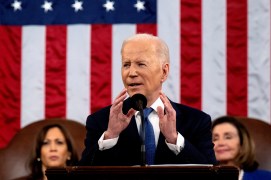
A decade later, legislation to provide baseline protection for Americans’ information privacy is still unfinished business. But President Biden has weighed in personally. In last year’s State of the Union address, he brought Facebook whistleblower Frances Haugen to the House gallery to underscore his surprise statement that “It’s time to strengthen privacy protections; ban targeted advertising to children; demand that tech companies stop collecting personal data on our children.”
The Congress Biden addressed then made significant progress on strengthening privacy protections for all individuals and adding to those for children. Three out four leaders of the Commerce committees in each house reached bipartisan agreement on what became the American Data Privacy Protection Act (ADPPA), which was ultimately reported out of the House Energy & Commerce Committee in July by a 53-2 vote. Nonetheless, it never came to the House floor because of opposition by Speaker Nancy Pelosi and other California officials because the bill would preempt significant aspects of that state’s first-in-the-nation privacy law.
This year, President Biden will give his address with another California Speaker on the rostrum behind him—Kevin McCarthy (R-CA), who did not join the California contingent opposing the ADPPA and, in 2019, called on Congress to adopt “a clear privacy framework that sets one standard for the country ….” in the New York Times. In the meantime, the President has made privacy legislation and a tech agenda a centerpiece of staking out bipartisan ground. His January 11, 2023, op-ed in The Wall Street Journal made a target of companies’ use of personal data and called for “serious federal protections for Americans’ privacy,” with clear limits on how companies can collect, use, and share highly personal data with restrictions on targeted advertising including banning it for children. Sounds a lot like the ADPPA.
Against this backdrop, it would be a small, logical, and concrete step for Biden to reiterate his support for comprehensive privacy legislation in this year’s State of the Union, saying something like:
“Last year, I said we need to strengthen privacy protections for all Americans, especially kids. The last Congress made strong and bipartisan progress on that front. This year, let’s finish job by enacting nationwide legislation that limits the personal information companies collect, use, and share and protects kids and teens from behavioral advertising. It’s long overdue.”
That President Biden’s op-ed was placed in the Wall Street Journal behind a paywall, with its more Republican-oriented readership, suggests his bipartisan outreach is genuinely aimed at producing results. And, with the delicate balance in Congress, no partisan bill can pass both houses. It is too early to tell whether Speaker McCarthy and his caucus are willing to reciprocate, but the op-ed bookends and the foundation laid by the ADPPA makes comprehensive privacy legislation a promising path for bipartisan accomplishment. The State of the Union can be another step on this path.